Every August, forums and gardening groups across Spain and Portugal fill up with the same handful of questions about keeping a warm dry climate vegetable garden going through the heat — and a fair amount of advice that doesn't hold up once you look closely. This month I went through what growers in this climate are actually asking and saying right now, checked the claims against the evidence and against my own garden, and pulled it together here in two parts.
The first part deals with getting your garden through the August heat — watering, containers, going away, and the pest pressure that comes with it. The second part answers a question beginners ask a lot this time of year: is it too late to plant anything? It isn't, and I'll show you exactly what's still worth sowing.
Understanding Climate Zones
As with all our seasonal posts, this is written for the mild winter climate — USDA Zone 9–10, Köppen Csa. This covers the Serra de Monchique, the western Algarve, southern Spain, coastal Italy, Southern California, central Chile, parts of South Africa and southwestern Australia. If you're new to how we define these zones and why they matter, What to Sow and Plant in May walks through the framework in full — this post builds on that.
August here means peak heat, and the start of planning ahead for autumn.
Part 1 — Getting Your Garden Through the August Heat
Evening Watering Cools the Air
When hot days are approaching, I flood irrigate all the channels the evening before. The moist environment this creates cools the air around the plants by a few degrees, and the effect carries into the next morning.
Research into irrigation and microclimate measured this directly: evening and night watering lowers air and soil temperature, and the cooling effect lasts for hours afterwards rather than fading immediately.
If you're on drip irrigation rather than flood, I've tested this myself and it works the same way.
A Watering Myth to Skip
You may see advice claiming that watering with a sprinkler at midday cools plants the way a pool cools your skin. Be careful with this one — hot water sitting on leaves in full midday sun is far more likely to scorch than cool. The standard advice to water at dawn or dusk still holds.
Mulch — Thickness Matters More Than Timing
There's a warning going around not to mulch during a heatwave right after watering, because it supposedly traps moisture and causes fungal problems. In my experience, mulch always does a good job, and the wider evidence agrees — mulching onto already-moist soil is when it works best, not worst.
What actually matters with mulch:
- Keep it away from the stem itself — piled against the stem, it can cause rot.
- Use a generous layer, at least 8–10 cm. Anything thinner won't suppress weeds properly.
Watering Containers in Summer Heat
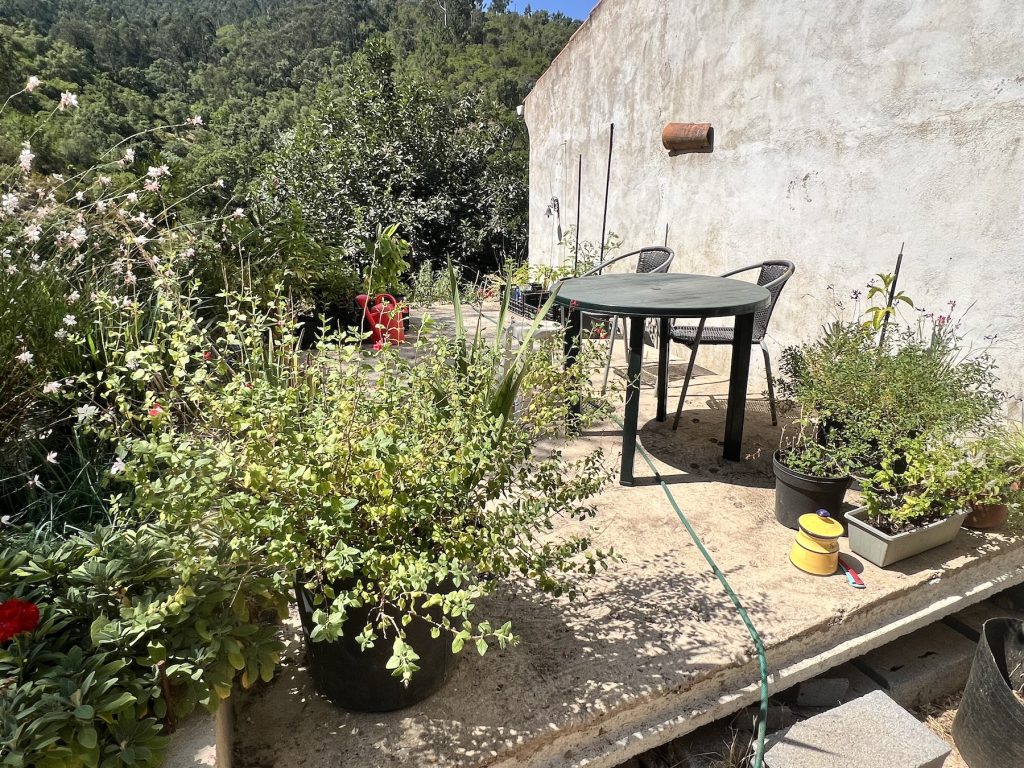
Containers need their own approach in this heat. I water heavily once a day on hot days — but that much water can pool at the bottom of a pot and drown the roots, as strange as that sounds.
What helps:
- Argila expandida (expanded clay pebbles) in the bottom of larger pots improves drainage and regulates moisture. Small pots don't need it.
- Small terracotta pots often can't hold enough water through a hot day. Use a plastic pot for growing and slip it inside the terracotta pot for looks.
- Bigger terracotta pots are usually fine on their own.
- Partial shade matters. Keep pots somewhere that isn't in full sun all day — ours stay close to the house so they're shaded part of the time.
Going Away for the Summer
A lot of August advice frames this as "which plants can survive neglect" — usually naming lettuce, spinach and rocket as the fragile ones. That doesn't really apply here, since we don't grow those crops in the middle of summer in this climate anyway.
The real question isn't your plant list — it's your irrigation system. A fully grown, well-established garden that's been deep-watered can hold for about a week without you, enough for a six-day trip, though some plants will sulk rather than thrive while you're away. A hose can't get you through a week away: hand-watering means daily watering, which means no holidays.
The ideal setup is automated irrigation. Without it, the job before a summer trip is to walk your whole system and fix its weak points, so it can run — or at least hold — without you.
One more rule: don't sow seed or plant out seedlings right before you leave. New sowings and freshly planted seedlings have no buffer at all. Save that job for when you're back.
Pests to Watch This Month
The usual August pressure applies: aphids, whitefly, tomato leaf miner and red spider mite all favour the heat.
Red spider mites feed on the underside of the leaf, but the damage shows up on top — yellow stippling on the upper leaf surface, eventually drying and browning the leaf. If you turn a suspect leaf over, fine webbing on the underside confirms it.
A Pest That Isn’t
Small pale clusters of eggs on the underside of a leaf are often assumed to be a pest. They can just as easily be the eggs of a parasitic wasp working in your favour. Worth a closer look before reaching for soap or oil.
Why We Don’t Get Red Spider Mite
We don't see it in our garden, and the research points to why. Outbreaks are strongly linked to broad-spectrum spraying, which wipes out the mites' natural predators far more effectively than it wipes out the mites. They're also linked to drought-stressed plants, which tolerate mite damage far worse than well-watered ones, and to dusty conditions, which interfere with the mites' predators and let them multiply unchecked. Not spraying, watering consistently, and keeping the soil covered rather than bare and dusty all work in your favour.
A Spanish Wasp Story
On Spanish gardening forums this year, growers have been talking about a bad year for a small wasp-like pest on peppers they call "avispilla" — worse, some say, than any year before. It's paired with an old countryside saying: "año de avispas, año de nieves y ventiscas" — a year of wasps, a year of snow and storms, the idea being that wasps rushing to feed before a hard winter give the season away. There's no evidence behind the forecast, but it's a nice piece of folk wisdom.
Worth knowing too: "avispilla" isn't one specific insect — it's a catch-all term, and on pepper forums it sometimes turns out to be exactly the harmless wasp eggs mentioned above rather than a true pest.
Part 2 — What You Can Still Plant in August
Beginners often assume August is a dead month in the garden. Two crops say otherwise.
| Crop | Sowing window | Notes |
|---|---|---|
| Dwarf beans (feijão-anão) | July is our main window; August still works for most varieties | Haricots verts (fine beans) are the exception — sow through June and July, or a few days into August at the very latest |
| Cabbage seedlings | Plant out in August rather than waiting for September | Gets a head start before sand fleas, caterpillars and snails become active |
Dwarf Beans
We usually start sowing in July — June works too, but doesn't fit our bed rotation. Portuguese varieties tend to be more robust, bigger plants that handle rough weather better. There's a huge range available, so check your seed packet for exact timing, but almost all dwarf bean varieties can still go in during August.
The one non-negotiable is water. Newly sown seed needs watering every second day, or nothing will happen. Once the seedlings have four or five true leaves and a bit of a root system, they can join the rest of your watering schedule.
Cabbages
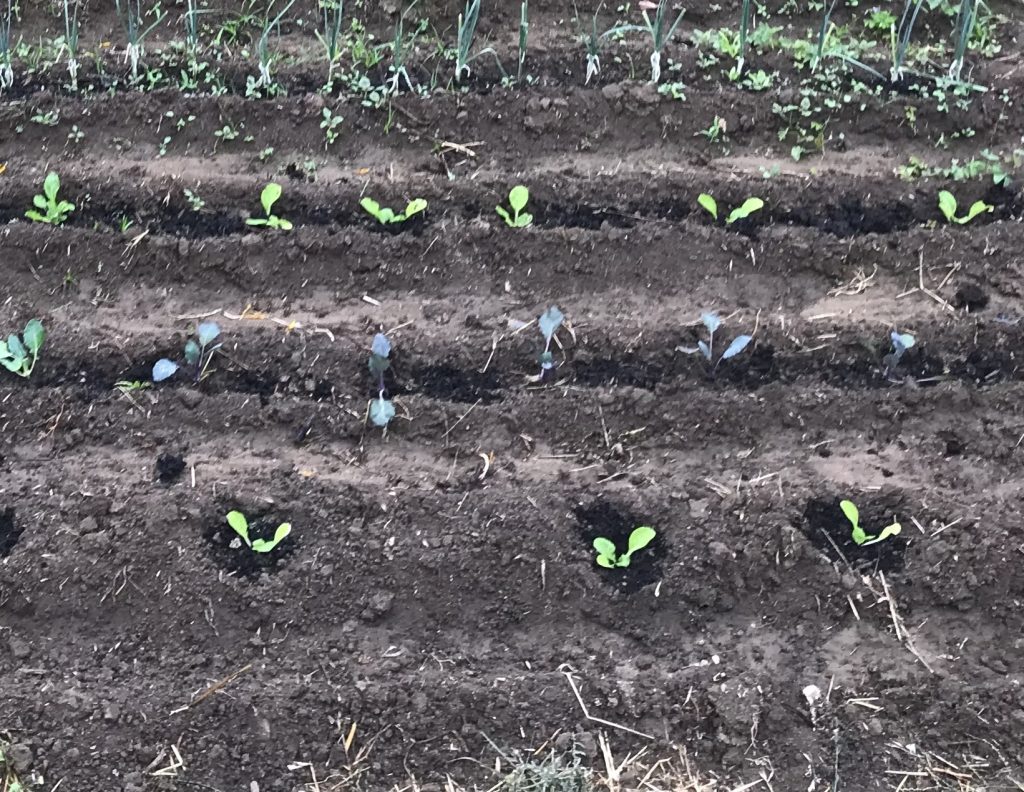
This is the biggest change I've made in my own garden. I used to wait until September to plant out cabbage seedlings, and lost a lot of them to sand fleas, caterpillars and snails.
Planting in August instead means the seedlings get a head start before those pests are active. By the time the pests do show up, the plants are established enough that handpicking actually keeps pace.
Like the beans, cabbage seedlings need watering every second day while they establish. I plant each one into a small "kuiltje" — a little hollow — so I can water it individually rather than the whole bed. It feels like a lot of work, but it pays off.
Also This Month — Saving Your Own Tomato Seed
This isn't planting, it's the other end of the cycle: toward the end of August, once your tomatoes are ripening well, it's worth saving seed from your best plants for next year. Tomatoes grow true from their own seed — plant the seed from an ordinary tomato and you get the same tomato again — which makes them one of the easiest and most rewarding seeds for a beginner to save.
One thing to know first: if the seed packet you originally used said F1, saved seed won't grow the same tomato — F1 varieties are hybrids and don't come true from seed. If you started from bought seedlings rather than seed, you likely have no way of knowing whether the parent was an F1 unless you asked at the time.
My method:
- Take an overripe tomato and put it in a small bowl with a little water.
- Spit in it, and leave it for a few days until it just starts to smell. The enzymes in saliva help break down the gel coating around each seed, the same coating that would otherwise stop it germinating too early inside the fruit.
- Rinse the seeds in a sieve.
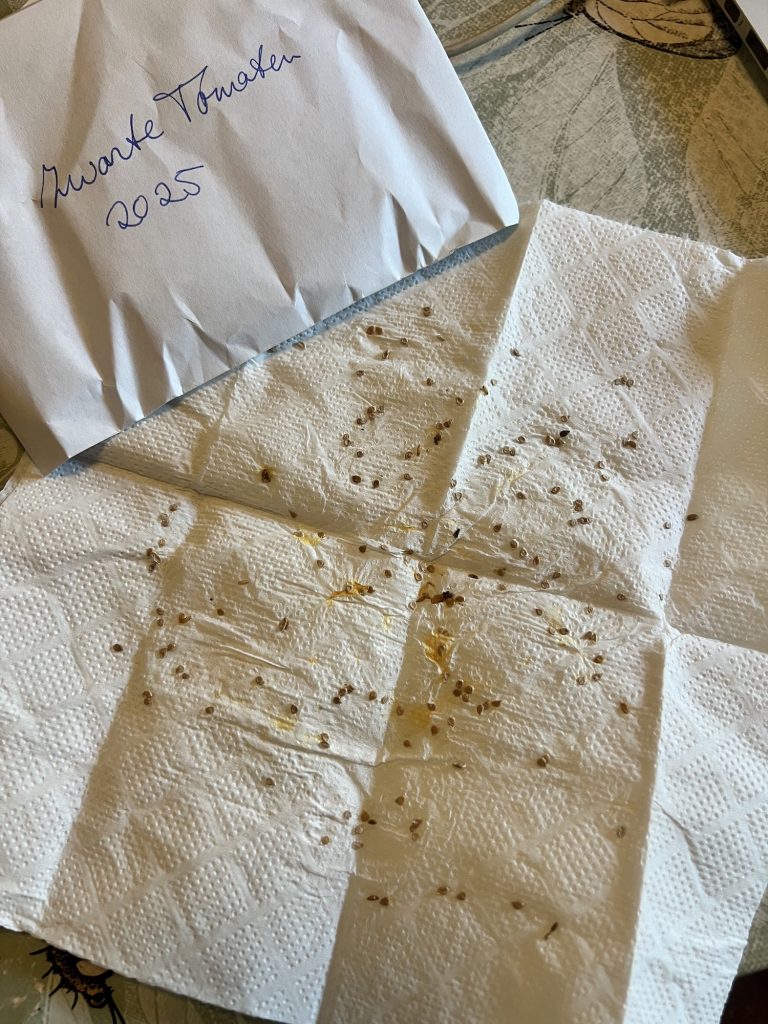
- Spread them carefully on a paper towel to dry — they'll stick to the paper as they dry.
- Store the paper in an envelope, and write the variety and the date on the envelope before you tuck it away.
When you're ready to use them next year, cut the paper into pieces with a few seeds on each, or plant a whole piece under a bit of soil and water it in.
In Short
Part 1 was about getting your garden through the heat: water in the evening, mulch generously but keep it off the stem, protect containers from drowning, and fix your irrigation before you leave rather than picking "tough" plants. Part 2 was about not writing August off — dwarf beans and cabbage seedlings both still have time, and a good harvest of tomatoes is worth a few minutes of seed-saving before the season turns.
If you're heading into your first summer here, come and learn it hands-on — our next 101 Starters Course walks through exactly this kind of seasonal decision-making, in the garden, at the time of year it actually matters.
Find Out About Our Courses at Monchique Homestead