You water your vegetables every day. Sometimes twice a day when it is hot. And yet the plants look tired, grow slowly, or produce less than you expected. More water should mean better results — so what is going wrong?
The answer usually comes down to two things: how much you give at once, and how regularly you give it. Both questions matter. And once you understand what is happening underground, the logic becomes clear. What has blossom end rot got to do with it? More than you might expect.
Why watering every day is often too much
When you water a little every day, the moisture stays near the surface. The top few centimetres of soil are constantly wet, and the roots have everything they need right there. So they stay shallow — close to the surface, close to the water.
A shallow root system is a fragile one. The moment you miss a day, or the sun is stronger than usual, the surface dries out quickly and the plant is already under stress. You have trained it to be dependent.
There are other problems too. A constantly wet surface encourages fungal disease and can cause root rot in poorly drained soils. And when the top layer is always saturated, there is less oxygen in the soil — something roots need just as much as water.
More water at once, less often
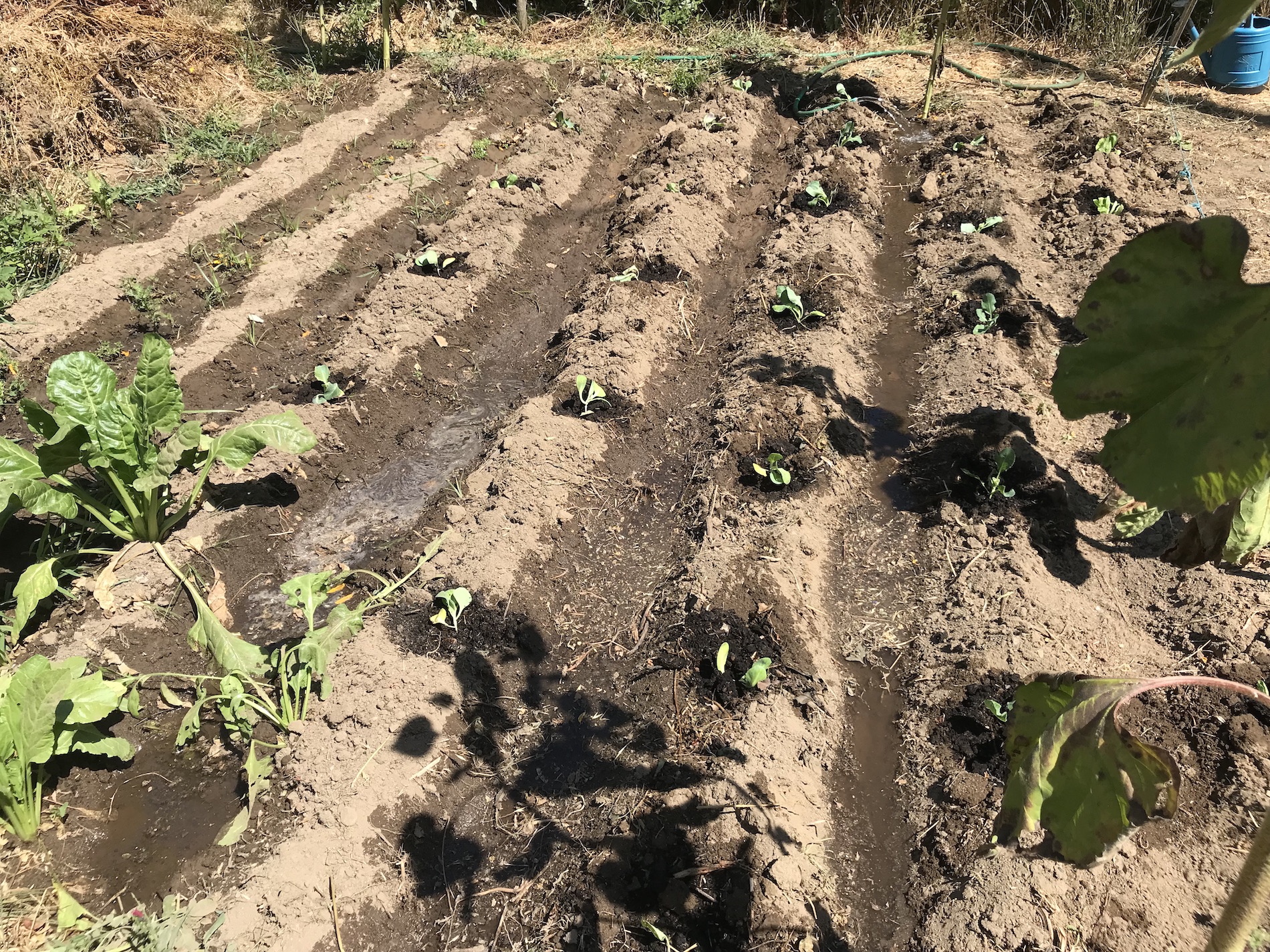
When you give a generous amount of water in one go, the water moves downward through the soil profile. As the surface dries out over the following days, the moisture is still there, deeper down.
Roots follow the water — growing downward with each watering cycle, going a little deeper every time. After a few weeks, you have a plant that can draw moisture from soil that has been dry at the surface for days. That plant can handle a hot day, a missed watering, or a dry week far better than one that has always been watered shallowly.
In practice this means: with drip irrigation, once every three days is usually enough during the main growing season. With flood irrigation, once a week. The exact interval depends on your soil, your temperatures and the time of year — but the principle holds.
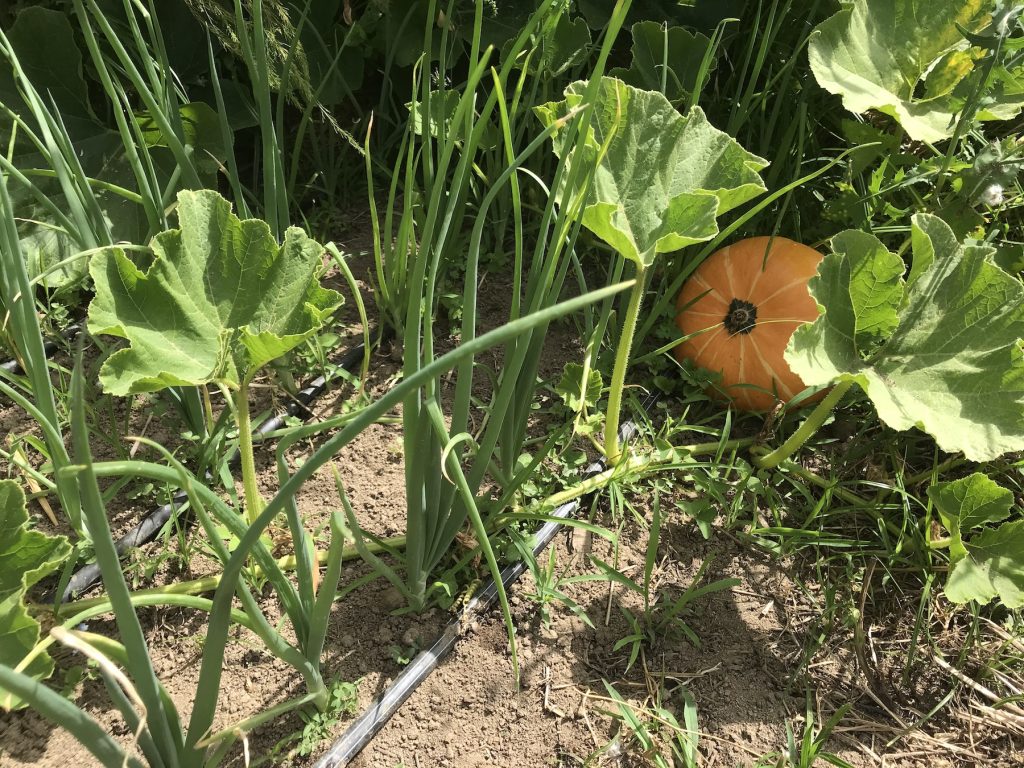
One important note about drip irrigation: think in hours, not minutes. An emitter running at 1 litre per hour gives barely more than a cupful of water in five minutes — that barely penetrates the top few centimetres. Long enough to reach the roots is the only measure that counts.
What happens when the rhythm breaks
Watering deeply and less frequently only works if you do it consistently. Long dry periods followed by sudden heavy watering cause a different kind of problem entirely.
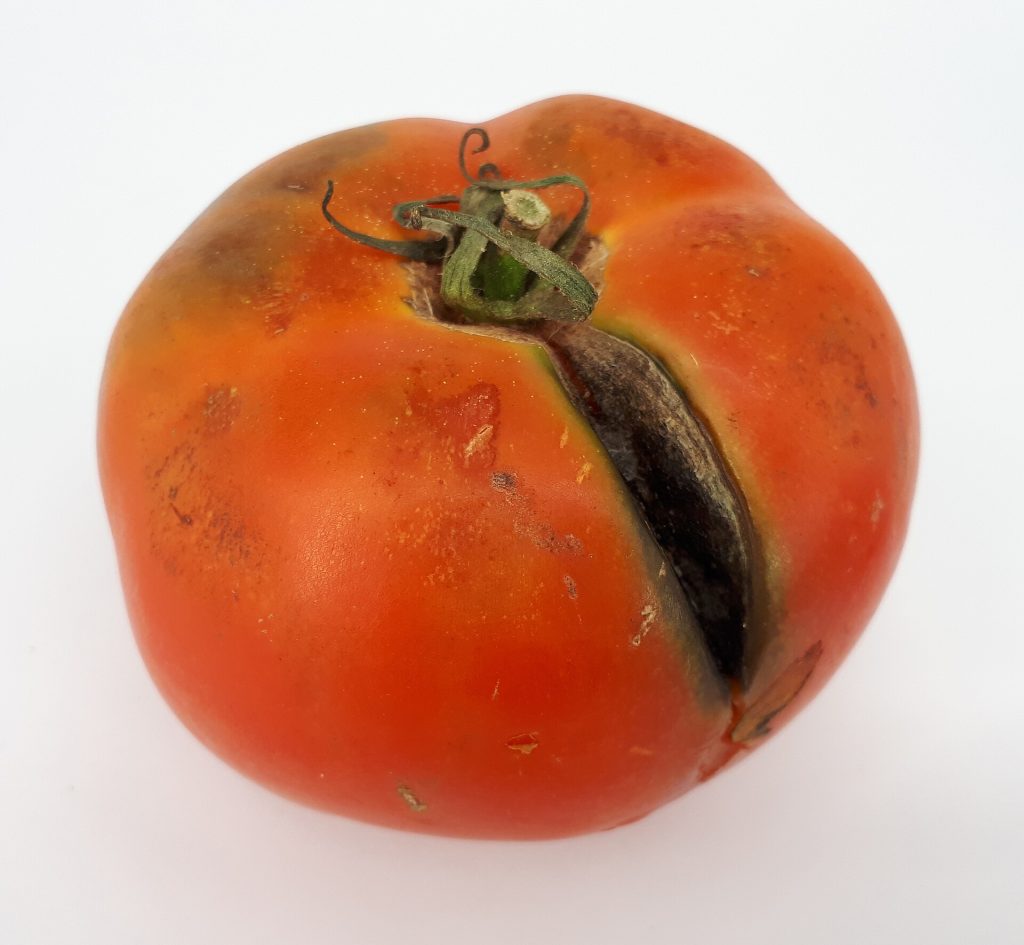
The most visible example is splitting tomatoes. When a plant goes through a dry spell and then receives a large amount of water at once, the fruit absorbs moisture faster than the skin can expand. The result is a split, often running from stem to base. It is not a disease and it is not a soil problem. It is a direct response to fluctuation.
Blossom end rot works through a different but related mechanism — and this is where the calcium question comes in.
Blossom end rot and the calcium question
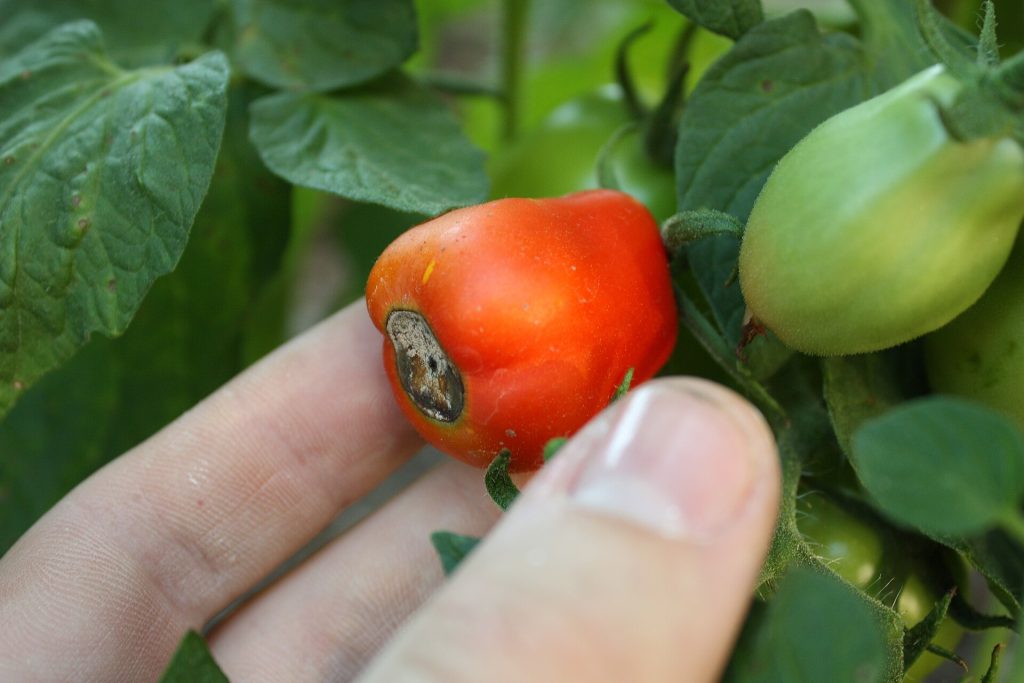
Blossom end rot is the dark sunken patch that appears on the base of tomatoes, peppers and courgettes. Search online for a remedy and you will find the same advice repeated almost everywhere: add calcium. Sprinkle lime, apply a foliar calcium spray, water with diluted calcium chloride. It is one of the most widely shared remedies in vegetable gardening — and in a warm dry Mediterranean climate, it usually does not solve the problem.
What calcium actually does in a plant
Every plant cell has a wall around it — a rigid structure that gives the cell its shape and holds it together. This wall depends on calcium to stay strong. Without enough of it at the moment a cell is forming and expanding, the wall stays weak. When the cell fills with water and pressure builds, it collapses inward. That collapse is what you see as blossom end rot.
Why adding calcium rarely solves the problem in a warm dry climate
Calcium moves through a plant via the xylem — the vascular system that carries water upward from the roots. This movement is driven by transpiration: as the plant releases moisture through its stomata — the tiny pores on the surface of leaves through which it breathes — it draws more water up from the roots, and calcium travels with it.
When a plant experiences drought stress, it closes its stomata to conserve water. Transpiration slows, and calcium transport stops. When you then water heavily after a dry period, the fruit cells expand quickly — but without the calcium they need, because the transport system was interrupted during the dry spell.
The calcium is usually already there in the soil. The issue is that it was not moving consistently enough to reach the developing fruit. Inconsistent watering interrupted the supply — and no amount of added calcium fixes that.
What consistency looks like in practice
A consistent rhythm does not mean the same amount every time regardless of weather. It means a reliable pattern your plants can grow around — deep enough to reach the root zone, and regular enough that it never fully dries out between sessions.
The finger test is your most reliable guide. Push your finger about 5 cm into the soil near the plant. If the top is dry but there is still moisture at that depth, it is time to water. If it still feels moist, wait. If it is bone dry at that depth, you have left it too long.
For drip irrigation, check the day after watering: push a finger or thin stick at least 8–10 cm into the soil. If it is still moist at that depth, the system ran long enough. If it is already dry, run it longer next time.
Seeds and newly planted seedlings
Everything above applies to established plants. Seeds and seedlings are a different matter.
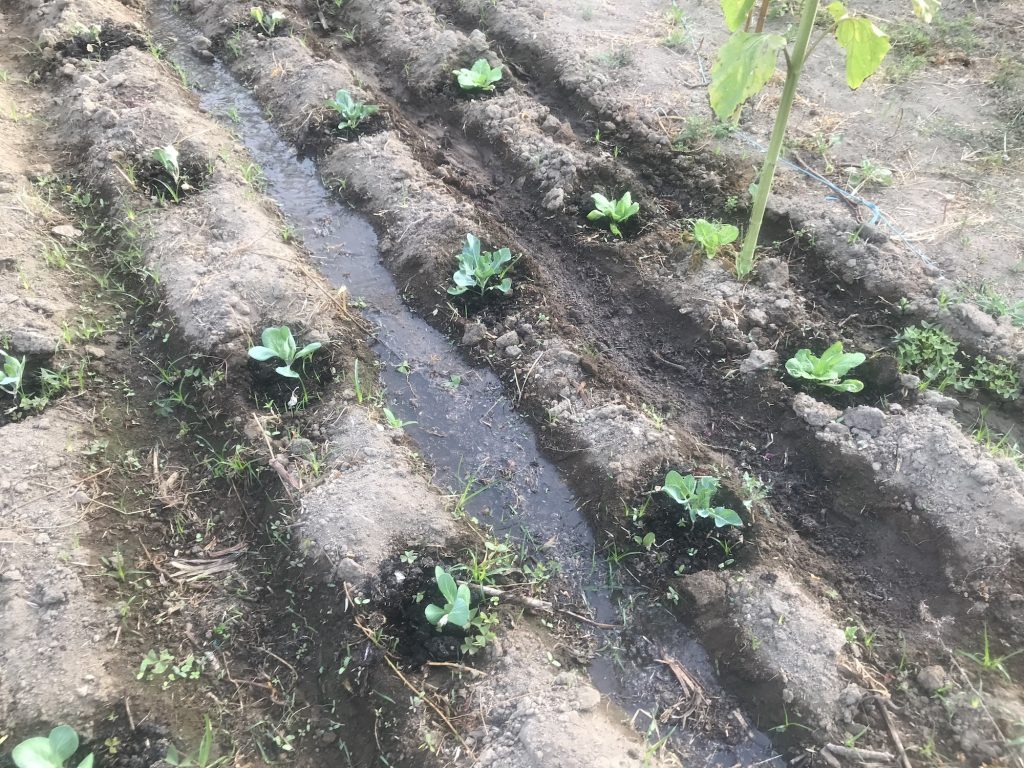
Freshly sown seeds need the surface to stay consistently moist until they germinate — they cannot send roots down to find water yet. Water gently and often, at least every two days, and more frequently in hot weather.
Seedlings that have just been planted out also need frequent watering for the first week or two, until their roots begin to establish. Once you can see new growth and the plant looks settled, you can start moving toward the deeper, less frequent rhythm.
The shift in thinking
The question most beginners ask is: am I giving enough water? The more useful questions are: am I giving it deeply enough, and am I giving it on a reliable rhythm?
A plant that receives water deeply and consistently will outperform one that is watered a little every day or erratically between long dry spells. Roots go deeper, cell development stays steady, and the cascade of problems that follows water stress simply does not happen.
For the practical details — how often to water, when, and which vegetables need most — read: Watering Your Vegetable Garden in a Warm Dry Climate
If you want to understand how watering fits into the full picture of starting a vegetable garden in a warm dry climate — alongside soil, timing, and what to grow — that is exactly what the 101 Starters Course covers, hands-on, in a working garden.
Find out about the 101 Starters Course at Monchique Homestead →