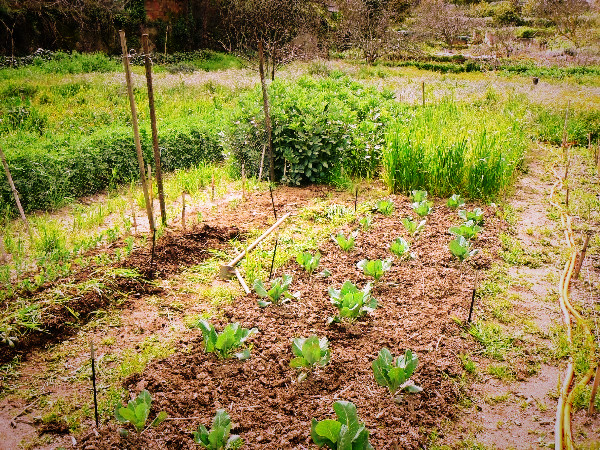
Deciding where to start your vegetable garden is the first and most important step. Picking the right spot takes a little time upfront, but it saves a great deal of frustration later. Because moving a vegetable garden usually means starting the soil from scratch, it is worth getting the location right from the beginning.
In this post we look at the practical things to consider — water, light, wind, soil, and whether you want to garden at home, on an allotment or as part of a group.
Water, light, wind and soil
Water
Water is essential in any vegetable garden. The most practical arrangement is a tap right next to your plot. From there you can connect any irrigation system later, or simply fill a watering can for newly planted seedlings. In a dry period, a little hand watering can make the difference between a plant that survives and one that does not.
Light
Most vegetables need a lot of light to grow well. Some may need a little shade in summer, but it is far easier to shade individual plants with a net than to work with a whole garden that is too dark.
Gardening in a shady spot or under large trees is very difficult. Tree roots compete for water and nutrients, and some trees do not tolerate anything growing under them at all. Moreover, the shade they cast is hard to work around. Check where the light falls at different times of day before you commit to a spot.
There are agricultural designs that work well with trees — agroforestry systems can be highly productive. However, these require a lot of space and do not scale down easily to a moderate vegetable garden.
Wind protection
If you live in a windy area, some protection for your vegetable garden is worth considering. A hedge, fence or wall on one side is often enough, depending on where the prevailing winds come from. A building can also work as a windbreak, but make sure it does not cast too much shade on the garden.
A light breeze is actually beneficial — too little air movement encourages dampness and fungal problems. What you want to avoid is strong wind that batters young plants and dries out the soil.
Soil
Soil is a topic worth exploring in its own right. The quality of your soil determines how productive your garden will be, and understanding it before you start saves a lot of guesswork. For a detailed guide on what to look for, read: About the Soil in Your Vegetable Garden — What You Need to Find Out
You can also find practical advice on preparing your soil in: How to Prepare Your First Vegetable Garden Bed
A peaceful place or a social one
Some people need their vegetable garden to be a quiet retreat. A colleague once told me that without his garden he could not have kept doing his demanding job. Between a busy workplace and a full household, the garden was the only place that was truly his. If that is you, a hidden corner somewhere calm might be exactly right.
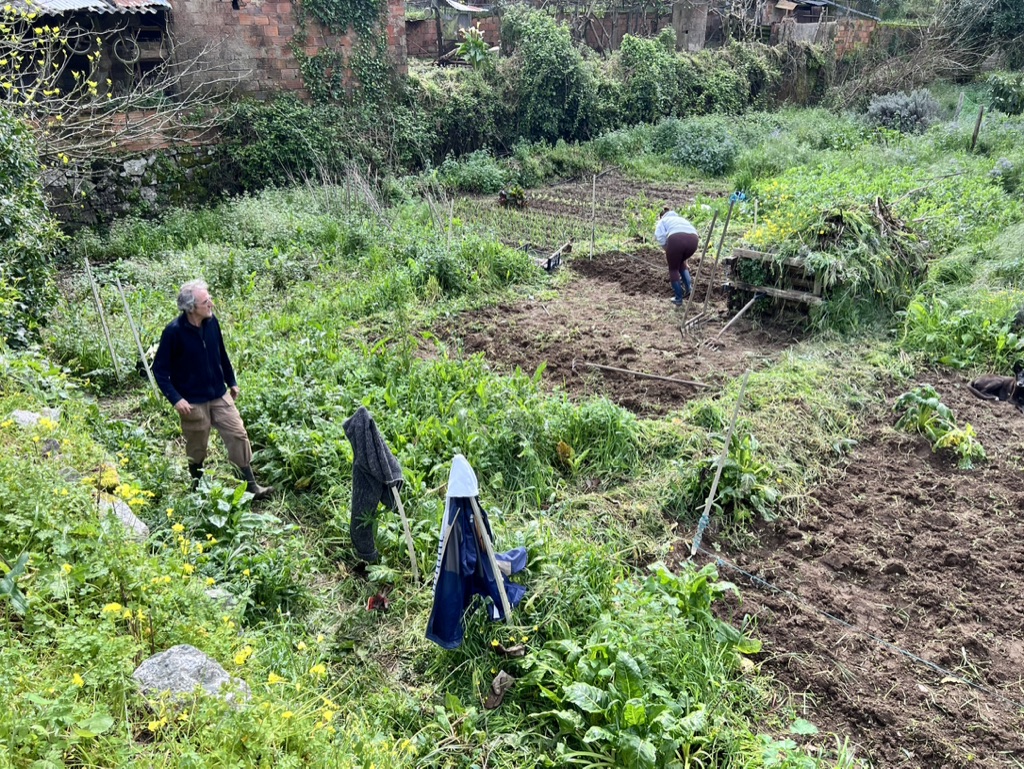
Others prefer their garden to be a social space — somewhere to meet neighbours, exchange seeds and knowledge, sit with friends on a warm afternoon. That is how I garden. My plot is part of a community garden right in the centre of Monchique, where several families tend their own plots alongside each other. Furthermore, there is a shared bed of perennial herbs that everyone uses freely. For an example of how a community garden can work well, read about our vegetable garden in Monchique.
Neither approach is better. The garden you will actually tend is the right one.
Gardening at home, on an allotment or in a group
In your own yard or on your own land
Gardening at home has obvious advantages. You can walk out of the kitchen and harvest something while you are cooking. You can fill small gaps in the day with a bit of weeding or watering. If you have young children, you can garden while they sleep.
A few practical things to think about:
- Distance from the kitchen — the closer the garden, the more you will use it
- Access by car — compost, manure, tools and materials are heavy. Being able to bring them close by vehicle makes a real difference
- Tool storage — keeping tools at the garden saves time. A small shelter protects them from sun and rain and extends their life considerably
The main disadvantages are space and soil. A small or shady yard limits what you can grow. Poor soil can be improved, but it takes time and effort. If any of these feel like obstacles, an allotment might be a better fit.
On an allotment
Many towns have small allotments available to rent for a modest fee. Some even have small shelters where you can sit with family or neighbours. An allotment gives you a dedicated space that is separate from home life — which for many people is exactly the point.
When choosing between allotments, think about whether it sits on a route you already travel — between work and home, or near the shops. Stopping by regularly is much easier if you are passing anyway. Access by car and a nearby tap are also worth checking before you commit.
The main drawback is that spontaneous visits are harder. You cannot just step outside for five minutes. Harvesting and watering need to be planned in advance, which suits some people and not others.
In a group
If you are part of a community or compound, running a garden collectively is another option. In my experience, group gardens work best when everyone has their own plot within a shared space. Larger shared tasks — a potato field, a compost system, a herb bed — can be managed together, but having your own area gives you autonomy and avoids the friction that shared plots sometimes bring.
I have gardened in a group sharing one plot and enjoyed it enormously. However, that group was already a close and cohesive community before we started. The garden grew out of the relationships, not the other way around. That matters more than most people realise.
Gardening with children
If you have young children who are curious about plants, give them a small corner of the garden to call their own — even just a square metre. Let them choose what to grow and take care of it themselves.
This is how I came to love gardening. My grandmother gave me a small corner of her garden where I grew lettuce, carrots and radishes. I was enormously proud of that first harvest. Every visit to her house started with a check on my corner. That feeling never really leaves you.
Go ahead
I hope this helps you find the right spot. If you have a question, leave a comment below — I read and answer every one.
When you are ready to go further, our hands-on courses at Monchique Homestead cover everything from preparing your first bed to growing a full season of vegetables. Come and learn it in the garden.