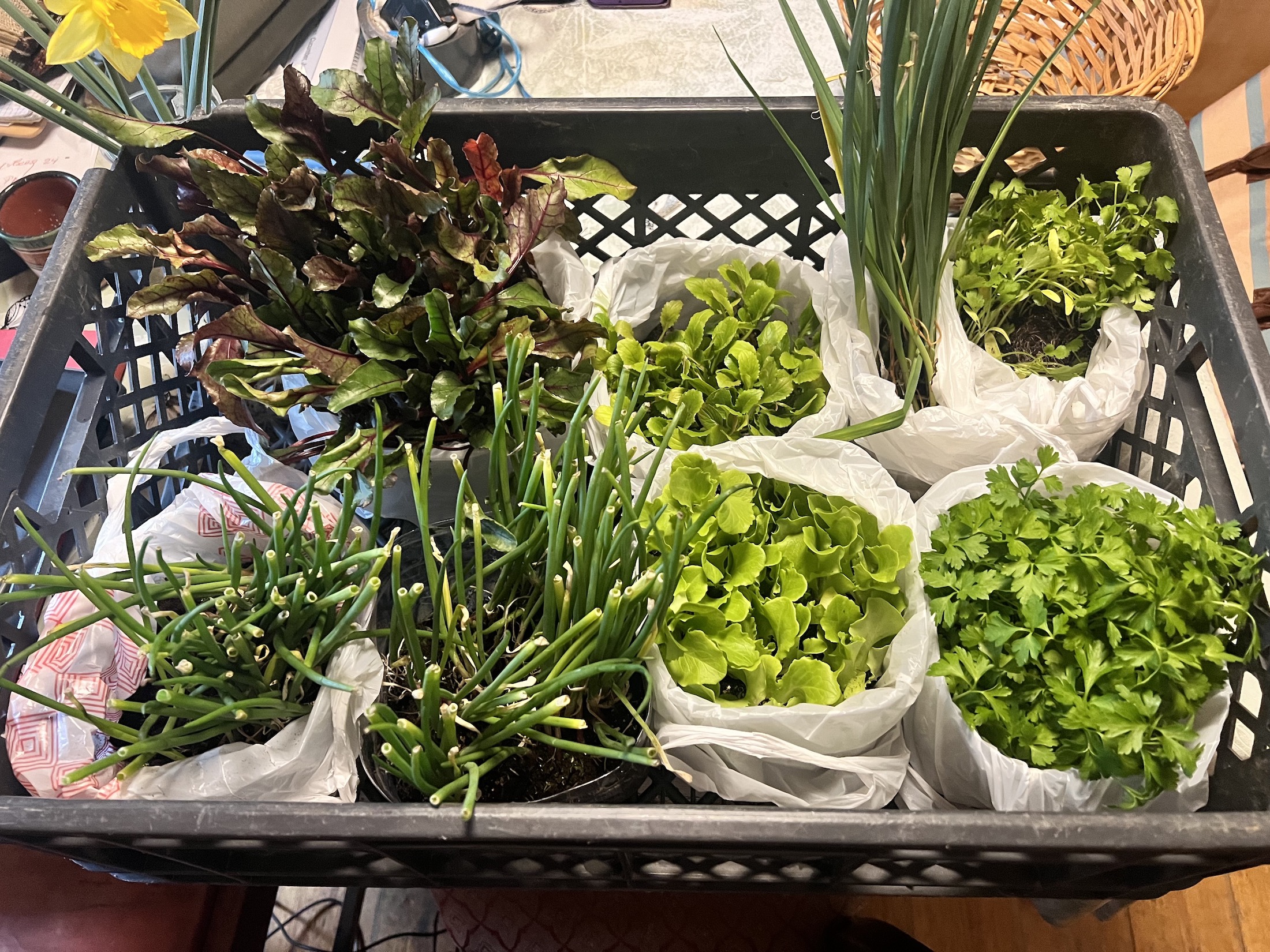
One of the most common questions I hear from people who've just moved to the Serra de Monchique is this: "I want to grow my own vegetables — but when do I actually plant things?"
It's a brilliant question. And the honest answer is: it depends on where you live. The Serra de Monchique is not the Algarve coast, and it's not northern Portugal either. It sits in the mountains — cooler, wetter, and with its own rhythm. What works on the coast won't always work up here, and timing your planting to our local conditions makes a huge difference to how much you harvest.
In this guide, I'll walk you through the basics of when to sow and plant the most common vegetables in our mountain climate — and share why getting this timing right is one of the most important skills you can develop as a beginner gardener.
Why Timing Matters So Much in the Serra de Monchique
Before we get into the calendar, let's talk about why timing is everything.
Every vegetable has a preferred temperature range for germination and growth. Some vegetables — like lettuce, spinach, and peas — love cool weather and will bolt (go to seed) the moment temperatures rise. Others — like tomatoes, courgettes, and peppers — need warm soil and warm nights to thrive, and will simply sulk if you plant them too early.
In the Serra de Monchique we have a Mediterranean mountain climate. Our summers are hot and dry, our winters are mild but can bring real cold snaps, and spring comes early compared to most of Europe. This is actually wonderful for vegetable gardening — we have a long growing season and can often grow two full rounds of cool-weather crops each year, one in spring and one in autumn.
But it also means you can't simply follow a planting calendar designed for the UK, Holland, or Germany — the climate most newcomers to our area are used to.
Sowing vs. Planting: What's the Difference?
You'll see two terms throughout this guide: sowing and planting. They're not the same thing.
Sowing means putting seeds directly into the soil in your garden (direct sowing), or starting seeds in small trays indoors or in a sheltered spot (indoor sowing) to be transplanted later.
Planting means putting a seedling — a young plant you've grown from seed or bought from a nursery — into its final spot in the garden.
Some vegetables prefer to be sown directly where they'll grow (carrots and radishes, for example, don't like their roots disturbed). Others are better started in trays and transplanted when they're stronger (tomatoes and peppers are classic examples). We cover both approaches in the 101 Starters Course, but for now, I'll indicate which method suits each vegetable.
The Serra de Monchique Planting Calendar
🌱 January & February — The Planning Months (and First Sowings)
January feels quiet in the garden, but it's already time to think ahead.
What to sow indoors / in trays:
Tomatoes (late February — give them 6–8 weeks before transplanting)
Peppers and chillies (these need a long season — start them early)
Aubergines
Early lettuce and leafy greens (can go straight into the garden in a sheltered spot)
What to plant directly:
Broad beans (they love the cold)
Garlic (if you haven't done it in autumn)
Onion sets
Spinach, rocket, and winter salads in a sheltered bed
The Serra de Monchique note: Our winters are mild enough that cool-weather crops can grow all winter in a protected spot. A simple polytunnel or cold frame extends your season considerably.
🌿 March & April — Spring Arrives Early
Spring comes early in the Serra. By March the soil is warming and the days are noticeably longer. This is one of the most exciting times in the vegetable garden.
What to sow directly in the garden:
Lettuce, rocket, and other salad leaves
Radishes (fast growing — great for beginners)
Beetroot
Chard and spinach
Peas
Carrots (from mid-March onwards).
Courgette can go in from mid-April, once night temperatures are reliably above 10°C
What to transplant:
Tomatoes — wait until after any late cold snaps, usually mid-to-late April in the Serra
Peppers and chillies
Lettuce seedlings started in trays
The Serra de Monchique note: Don't rush your tomatoes. We can get cold nights into April up in the mountains. It's better to wait a week than to lose a plant to a frost. Preparing your garden beds properly in advance means you're ready to plant quickly when the moment comes.
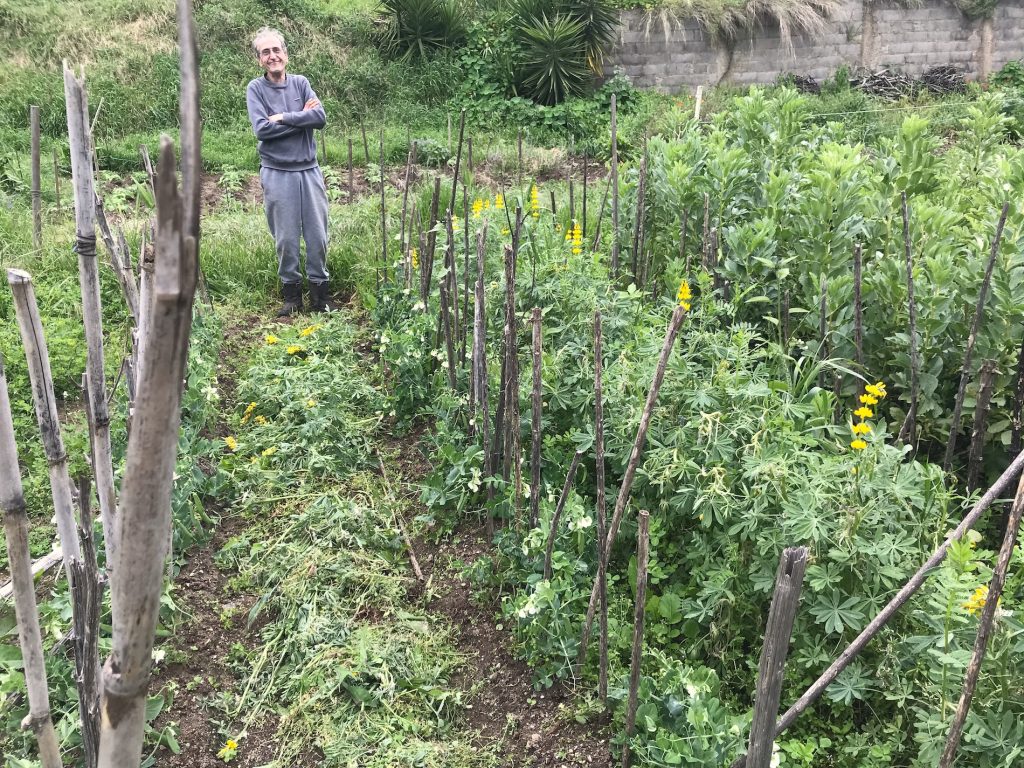
☀️ May & June — Full Summer Planting
By May the garden is in full swing. Warm-weather crops go in, and cool-season crops from spring are already producing.
What to sow directly:
Courgette and summer squash
Cucumbers
French beans and runner beans
Sweetcorn (needs a sunny, sheltered spot)
Basil (loves the heat — find out everything about growing basil here)
What to transplant:
Transplant any remaining tomato or pepper seedlings, and courgette plants you started in trays.
What to harvest:
Early lettuce, radishes, peas — your spring sowings are paying off!
The Serra de Monchique note: Irrigation becomes important from May onwards. Our summers are dry, and regular, deep watering is essential. In the 101 Starters Course we talk in detail about how to water effectively without wasting a drop.
🌾 July & August — Midsummer
The main summer crops are growing strongly. It's hot, and the garden needs regular attention.
What to sow directly:
A new round of lettuce (choose heat-tolerant varieties or give them afternoon shade, they don't like full sun in mid summer)
French beans for a second harvest
What NOT to do:
Avoid sowing carrots and root vegetables now as the soil is too hot for germination, and hold off on brassicas like cabbage and broccoli until temperatures start dropping in late August.
The Serra de Monchique note: July and August are maintenance months. Focus on harvesting and watering consistently rather than adding new plants.
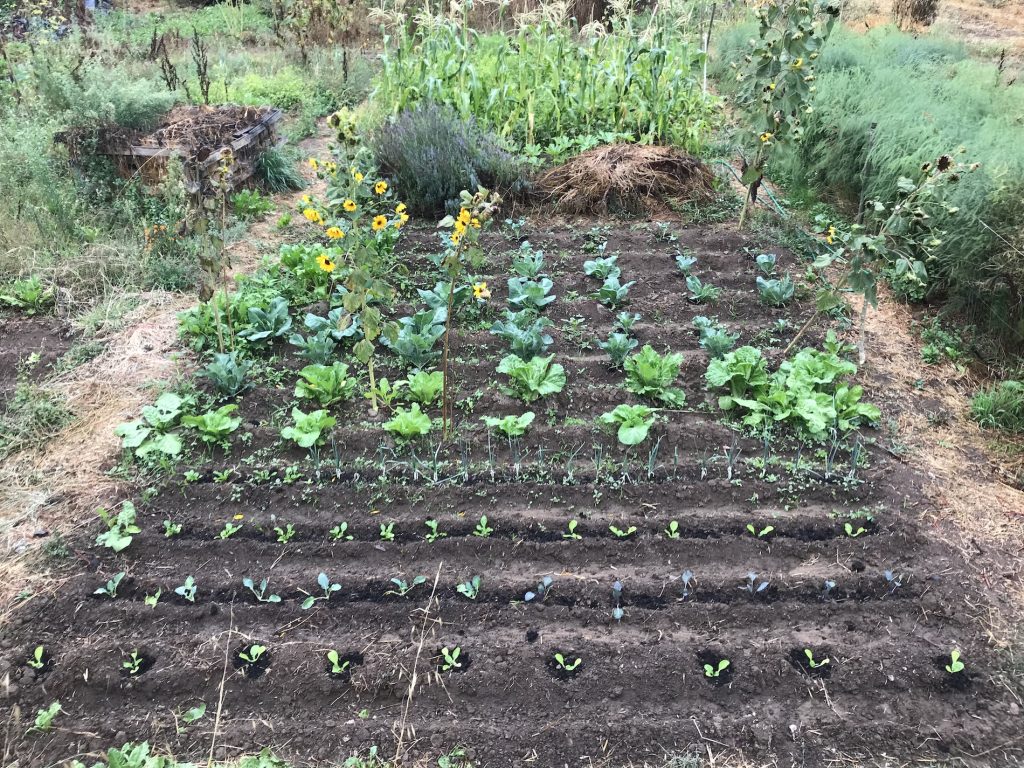
🍂 September & October — The Second Spring
This is one of the secrets of gardening in our climate: autumn is almost as productive as spring. As temperatures cool and the rains return, the garden wakes up again.
What to sow directly:
Lettuce, rocket and all salad leaves do brilliantly now, as do spinach, chard and radishes.
Beetroot
Turnips
Peas (for a winter/spring harvest)
Land cress and winter purslane
What to plant:
Broccoli, cauliflower, and cabbage seedlings (start in trays in late August/early September)
Leeks
Kale
The Serra de Monchique note: Autumn planting is something many newcomers miss because they're following northern European habits. Don't make that mistake — September is one of the most rewarding months to be in the garden here.
🌧️ November & December — Winter Crops and Planning
The garden slows but doesn't stop. November gardening in Monchique is still very much possible.
What to sow or plant:
Sow broad beans directly and plant garlic cloves now for a June harvest.
Winter salads in a sheltered spot
Cover crops (green manure) to protect and feed the soil over winter
What to harvest:
Autumn-sown salads, chard, spinach, broccoli — keep harvesting!
The Most Important Beginner Lesson: Don't Guess
The single biggest mistake new gardeners make — especially those new to the Serra de Monchique — is trying to remember all of this in their head.
Don't guess. Use a planting calendar.
A simple notebook or garden diary where you record what you sow, when you sow it, and what happens, is worth more than any advice I can give you. After two or three seasons, you'll have a record tailored to your specific plot, your specific microclimate, and your family's eating habits. This is exactly what we call the Garden Book in the Self-Sufficiency Course — your personal food production system.
Seeds or Seedlings: A Quick Word for Beginners
If you're just starting out, there's no shame in buying seedlings from a nursery. It takes some of the timing pressure off, and you can still learn everything you need to know about caring for your plants.
But learning to grow from seed is one of the most satisfying skills you can develop. Seeds are cheaper, you have far more variety to choose from, and understanding the full cycle from seed to harvest deepens your connection to the garden enormously.
In the 101 Starters Course (28–29 March at Monchique Homestead), we cover exactly this — when to sow, how deep, how to look after seedlings, and how to know when they're ready to go into the garden. If you're new to vegetable gardening and have recently moved to the Serra de Monchique, it's designed precisely for where you are right now.
Quick Reference: Serra de Monchique Planting Summary
| Vegetable | Sow / Plant | Method |
|---|---|---|
| Tomatoes | Feb (trays) → Apr/May transplant | Trays first |
| Peppers & chillies | Feb (trays) → May transplant | Trays first |
| Lettuce & salad | Mar–May, Sep–Nov | Direct or trays |
| Radishes | Mar–May, Sep–Oct | Direct sow |
| Carrots | Mar–Jun | Direct sow |
| Courgette | Apr–Jun | Direct or trays |
| Cucumbers | May–Jun | Direct or trays |
| French beans | May–Jul | Direct sow |
| Broad beans | Oct–Nov | Direct sow |
| Garlic | Oct–Nov | Plant cloves |
| Broccoli / Cabbage | Aug–Sep (trays) → Sep–Oct transplant | Trays first |
| Spinach & chard | Mar–May, Sep–Nov | Direct sow |
| Basil | May–Jun | Direct or trays |
| Peas | Mar–Apr, Sep–Oct | Direct sow |
| Beetroot | Mar–May, Sep–Oct | Direct sow |
Ready to Learn More?
If this guide has given you a taste of what's possible in your garden, the next step is getting your hands in the soil with proper guidance.
The 101 Starters Course — 28 & 29 March 2026 at Monchique Homestead — is a two-day, hands-on course designed for people who are new to vegetable gardening and new to growing in the Serra de Monchique. We'll cover preparing your beds, seeding and planting, caring for your vegetables, and building healthy soil.
It's a small group, very practical, and covers everything you need to get started with confidence..
👉 Find out more and register here