
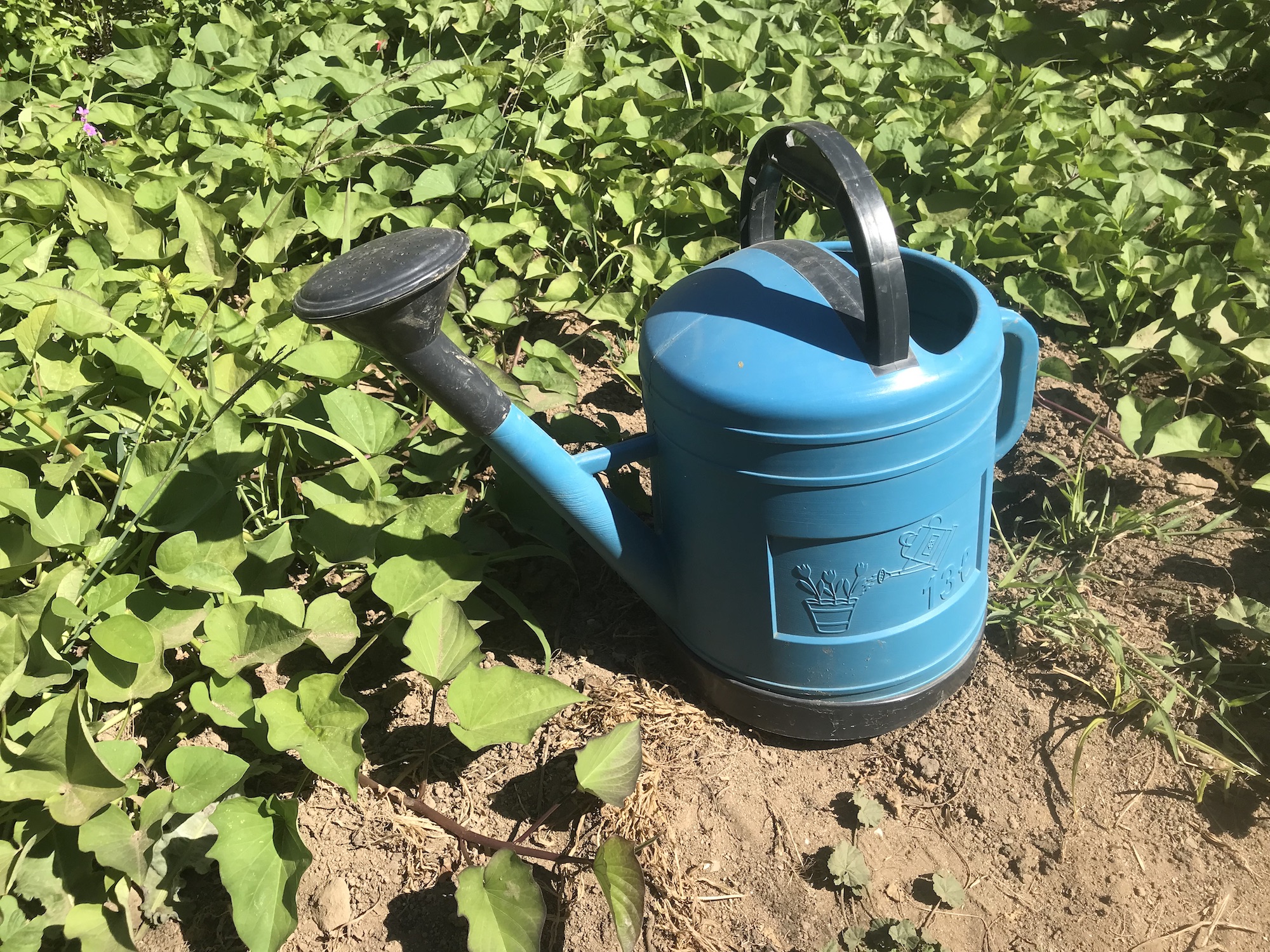
For anyone starting a vegetable garden in a warm dry climate — like the Serra de Monchique where we live — watering is where most beginners go wrong. Not because they do not care, but because the advice they find online is written for rainy temperate climates where the challenge is getting enough warmth, not managing drought. In a hot dry summer climate the rules are different, and getting watering right makes more difference to your harvest than almost anything else.
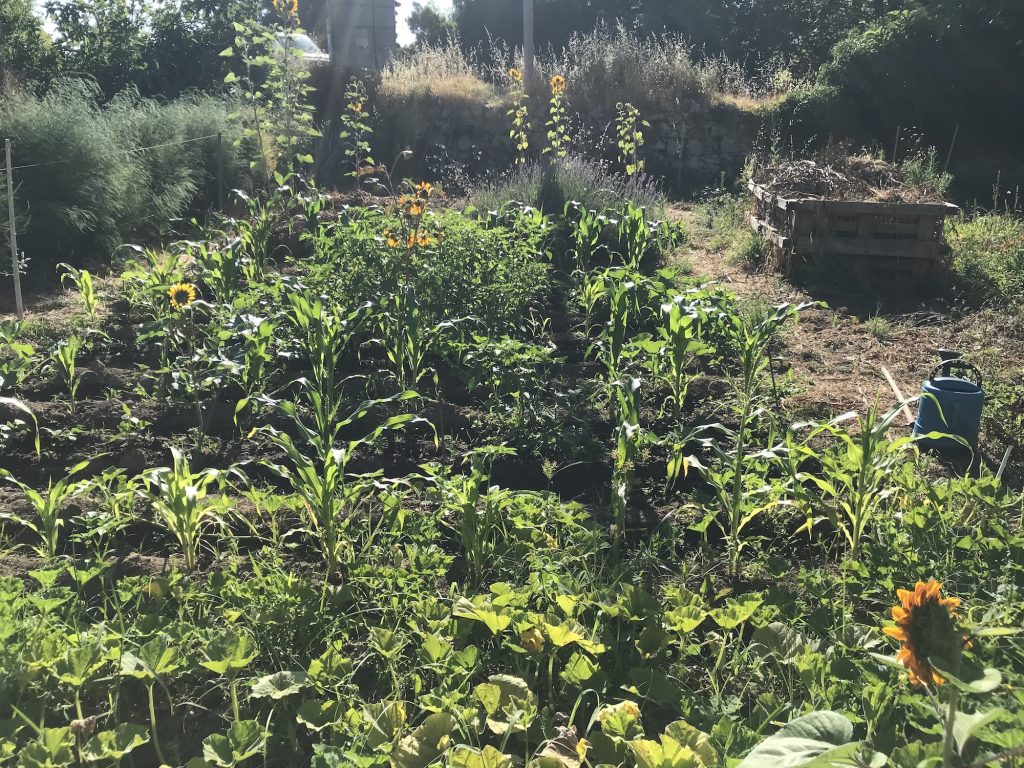
The most common mistake — watering too often and too shallow
Most beginners water a little every day. It feels attentive and caring. But frequent shallow watering actually makes your plants weaker over time.
When you water shallowly, the moisture stays in the top few centimetres of soil. The plant's roots follow the water and stay near the surface where it is available. Surface roots are vulnerable — they dry out quickly between waterings and make the plant dependent on daily watering.
Deep and infrequent watering does the opposite. The water soaks down to a depth where it stays moist for longer and the roots follow it down. Deep roots reach moisture that the surface never loses completely, making the plant far more resilient in the heat and drought of a warm dry Mediterranean summer.
The goal is always to encourage deep roots. Water thoroughly and then let the soil dry out partially before watering again.
How to know when to water your vegetable garden
The most reliable method is the finger test. Push your finger about 5 cm into the soil next to a plant. If the top feels dry but there is a little moisture at the fingertip — it is time to water. If it still feels moist at that depth — wait.
Once you know your garden and its soil well, you will develop a feel for its rhythm. In our vegetable garden in the Serra de Monchique we water once a week in late spring and early autumn. In summer, when the heat is at its peak, we water twice a week. This gives you a rough reference point — but always use the finger test first, because every garden and every soil type is different.
When to water in a warm dry climate — timing matters
This is one of the most important differences from cold climate advice. In a Köppen Csa climate — the hot dry summer Mediterranean climate found in southern Portugal, Spain, California, southwestern Australia, South Africa and central Chile — timing matters enormously.
Never water in the middle of the day
With a sprinkler: most of the water never even reaches the soil — it evaporates in the hot dry air before getting there. The little that does land on the soil surface evaporates almost immediately, leaving behind a mineral crust that hardens the surface and makes it harder for subsequent water to penetrate.
With drip irrigation: running drippers during the hottest part of the day can cool the microclimate around the plants — the evaporation happens right at the soil surface and lowers the temperature nearby. However, evaporation also concentrates salts and minerals right at the dripper holes, and over time these deposits block them. Late afternoon or evening watering is still the better default.
With hand watering or a hose: late afternoon or evening is always the right choice in a warm dry climate. Evaporation is minimal, the soil absorbs water properly and the plant has the whole night to take it up.
Water freely in the cooler months
In autumn, winter and early spring, morning watering is fine. Temperatures are mild, evaporation is low and there is no risk of overheating. This is also the period when rainfall takes care of much of the watering for you in a Mediterranean climate.
Water at the base, not on the leaves
Always direct water to the base of the plant, not over the foliage. Wet leaves in a hot dry climate invite fungal disease — powdery mildew on courgettes, blight on tomatoes. Both spread rapidly in warm conditions and wet foliage accelerates them considerably.
Drip irrigation is ideal for this reason — it delivers water directly to the root zone without wetting the leaves at all. If you are watering by hand or with a hose, angle it low and water around the base of each plant.
How much water different vegetables need in a warm dry climate
Not all vegetables have the same water requirements. Understanding which plants are thirsty and which are more drought tolerant helps you prioritise your watering.
High water needs — water regularly and deeply
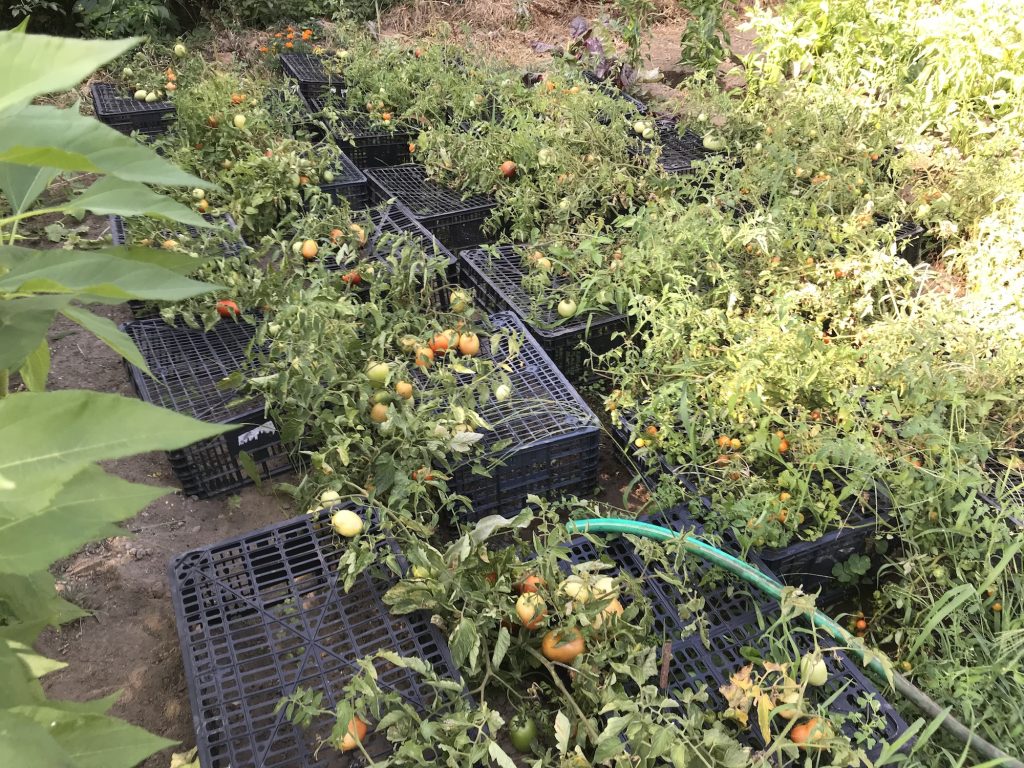
Vegetables that produce fruit have the highest water requirements. Tomatoes, peppers, aubergines, cucumbers, courgettes, squash and melons all need consistent moisture especially when flowering and fruiting. A dry spell at the wrong moment causes blossom drop, poor fruit set and split skins.
Leafy greens also need regular moisture. Lettuce, spinach and chard will go limp and bolt quickly in dry conditions.
Medium water needs
Beans and peas need consistent moisture when flowering and podding but are reasonably tolerant at other stages of growth.
Lower water needs — drought tolerant once established
Root vegetables like onions, garlic and carrots need less frequent watering once established. Their roots go deep and they tolerate drier conditions better than fruiting crops. In the cooler months in a warm dry climate, rainfall often takes care of most of their needs.
A special note on tomatoes
Tomatoes develop deep roots that reach moisture other plants cannot. Irregular watering — too wet then too dry — causes blossom end rot and fruit splitting. The goal with tomatoes is consistent deep watering rather than frequent shallow watering. Water deeply once or twice a week depending on the heat rather than a little every day.
Seedlings and transplanting — handle with care
Seedlings play by different rules entirely. They have shallow roots that cannot reach deep moisture and need consistent moisture in the top few centimetres of soil at all times. Check them daily during warm weather. Water gently with a fine rose on the watering can — a strong stream can wash seeds out of trays or knock over tiny seedlings.
Never transplant seedlings into the garden in full sun or during the heat of the day. Choose the early morning, late afternoon or an overcast day. Even if you water in immediately after planting, a seedling transplanted in full midday sun in a warm dry climate will struggle — the combination of root disturbance and heat stress is too much.
Always water in new plants immediately after transplanting, regardless of the time of day. This first watering settles the roots into the soil and makes a significant difference to establishment.
As seedlings establish and roots develop, gradually move toward the deeper and less frequent approach that suits mature plants.
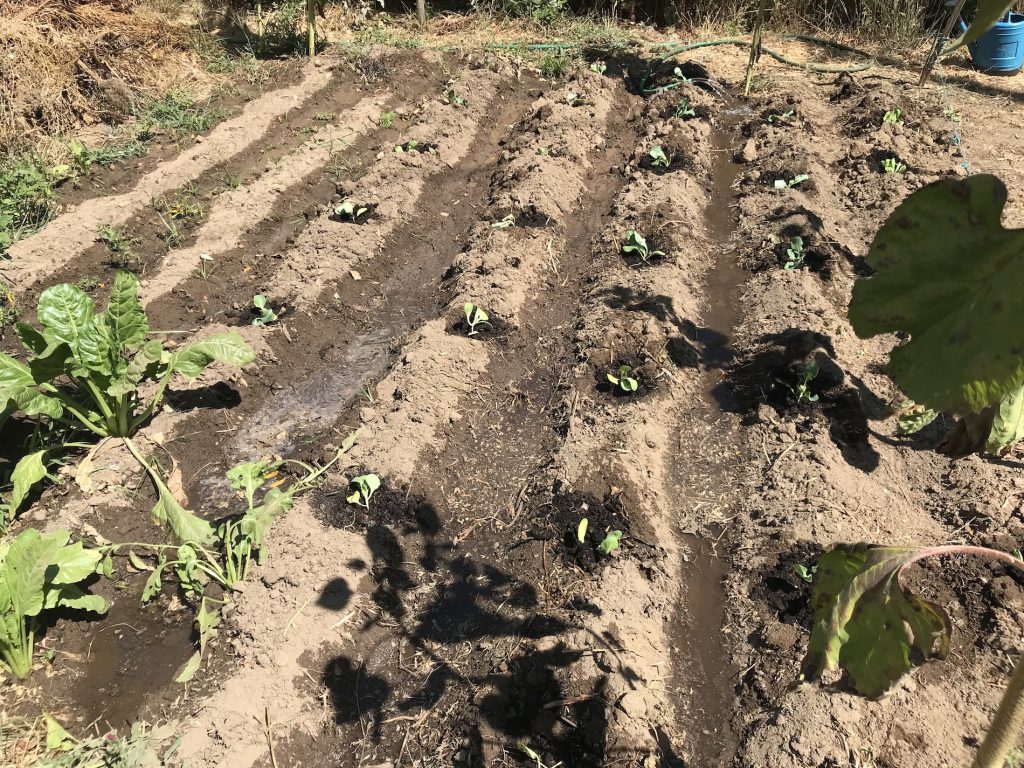
Sowing and watering in a warm dry climate — timing is everything
In a warm dry climate like the Serra de Monchique, sowing has two natural windows: spring and early summer, and again from late summer into autumn when temperatures begin to drop. The height of summer is not a good time to sow — the heat is too intense, the soil dries out too quickly and germination becomes unreliable.
This directly affects your watering approach. Seeds and fresh seedlings need consistent moisture in the top layer of soil to germinate and establish. In spring this is manageable — temperatures are rising but not yet extreme. In autumn the cooling temperatures make it easier again.
In summer, even with daily watering, the surface of the soil can dry out within hours in full sun. This is one of the main reasons sowing in summer fails — not lack of water exactly, but the inability to maintain the consistent surface moisture that germination requires. If you do need to sow in early summer, shade cloth over the seedbed and more frequent watering can help, but it is always a challenge.
The practical takeaway: plan your sowing calendar around the two cooler windows and save yourself a great deal of frustration.
Mulch — the simplest way to reduce evaporation
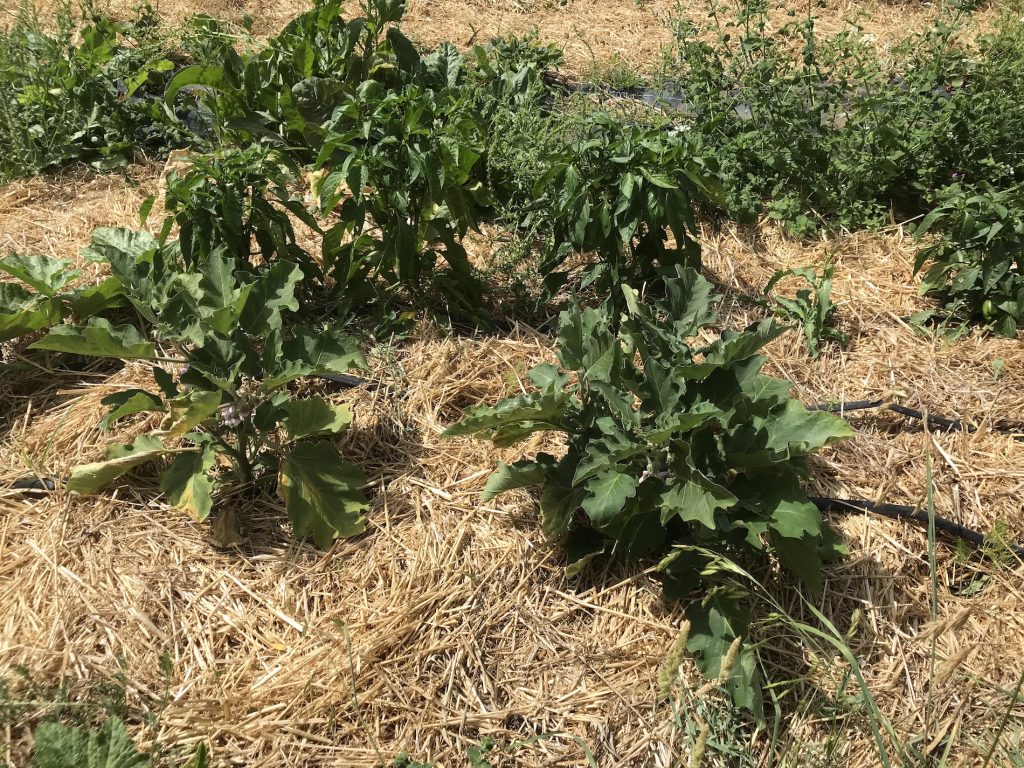
A layer of organic material — straw, dried grass clippings or chopped leaves — placed over the soil surface significantly reduces evaporation. Around established plants it keeps the root zone cooler and reduces how often you need to water. In a warm dry climate mulch is one of the simplest and most effective things you can do for your garden.
In spring and autumn mulch also helps maintain the consistent moisture that seeds and seedlings need to establish. However, never use mulch over freshly sown seeds. Wait until seedlings have emerged and are a few centimetres tall before covering the soil around them. Before that point, mulch prevents seedlings from reaching the light they need to grow.
Irrigation systems for a warm dry garden
In a warm dry climate some form of irrigation system is worth considering once you are beyond your first season. Hand watering a larger garden through a hot Mediterranean summer is time consuming and easy to miss.
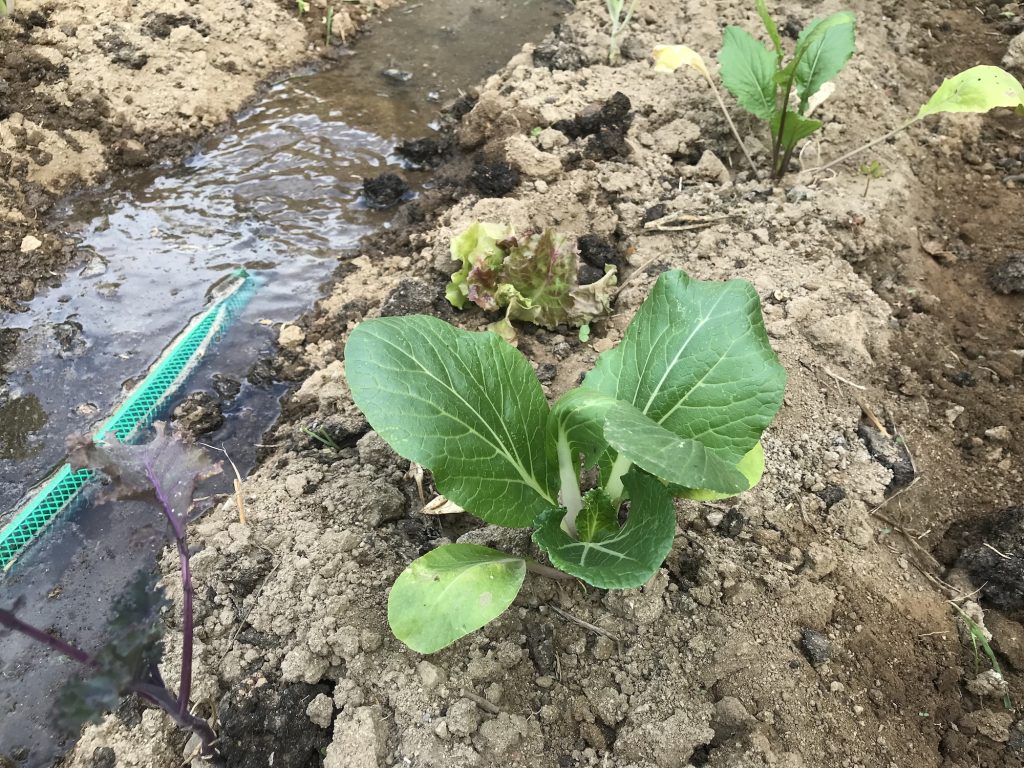
Drip irrigation delivers water directly to the root zone, minimises evaporation and keeps foliage dry. It is efficient, flexible and not expensive to set up for a home garden. Flood irrigation — where water flows through channels between planted rows — is the traditional system used in valley gardens across the Mediterranean world, including our own vegetable garden in the Bemparece valley in Monchique. Both systems work well in a warm dry climate. The choice depends on your layout and water source.
Whatever system you use, the same principles apply — water deeply, water at the right time of day and let the soil dry partially between waterings.
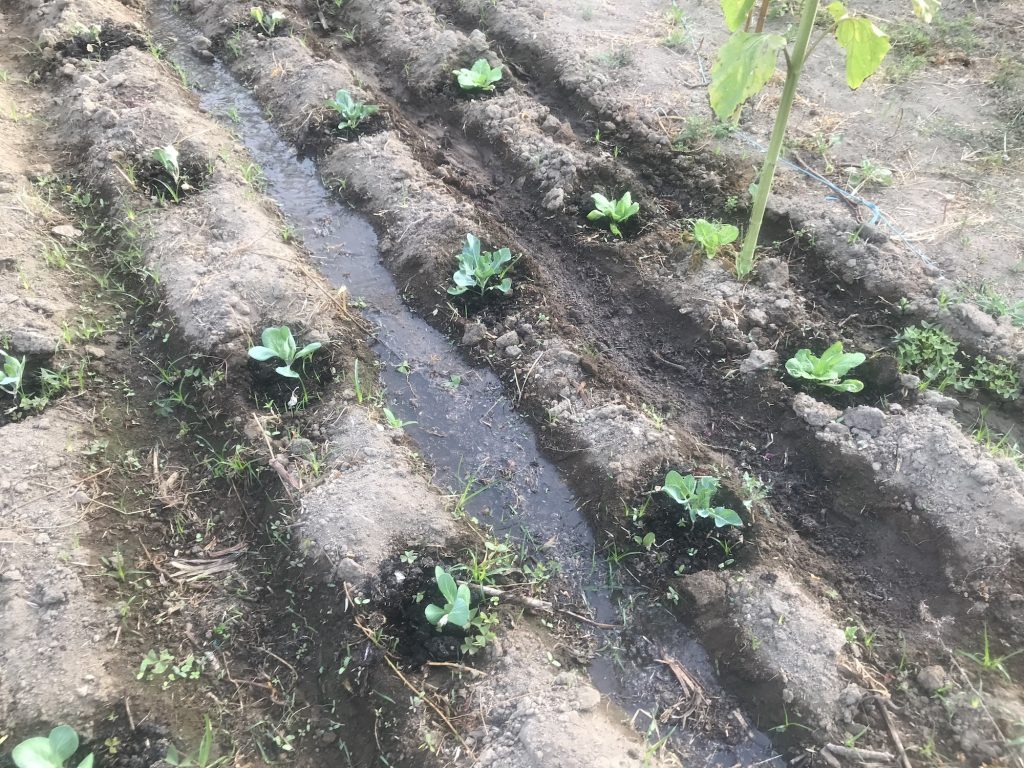
For more on how we irrigate our garden in Monchique, read: Growing Vegetables in Monchique — Life in the Bemparece Valley
If you would like to learn all of this hands on in a real working garden, our 101 Starters Course covers watering, irrigation and every practical aspect of starting a vegetable garden in a warm dry climate.
Find out about the 101 Starters Course at Monchique Homestead