A valley with a long memory
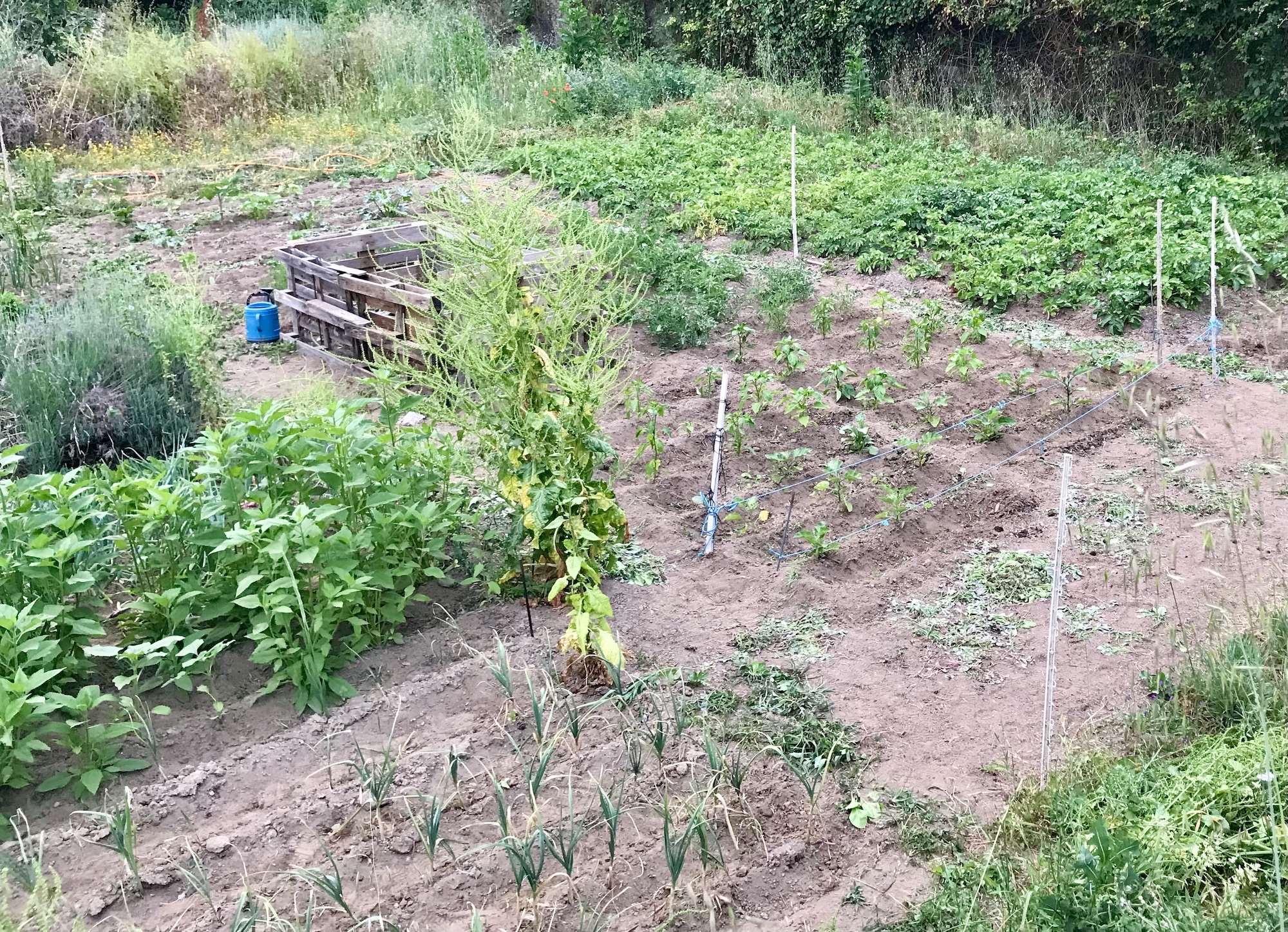
Our vegetable garden in Monchique is not on a hill. It is down in the Bemparece valley, along the small river that runs through town. Walk through Monchique on a weekday morning and you will see people heading toward that valley — hoe over one shoulder, basket in hand. The terraces on the slopes above have been worked for generations, cut into the schist by hand and held in place by dry-stone walls. Terracing here goes back to Roman times. Some of these walls have been standing longer than anyone can remember.
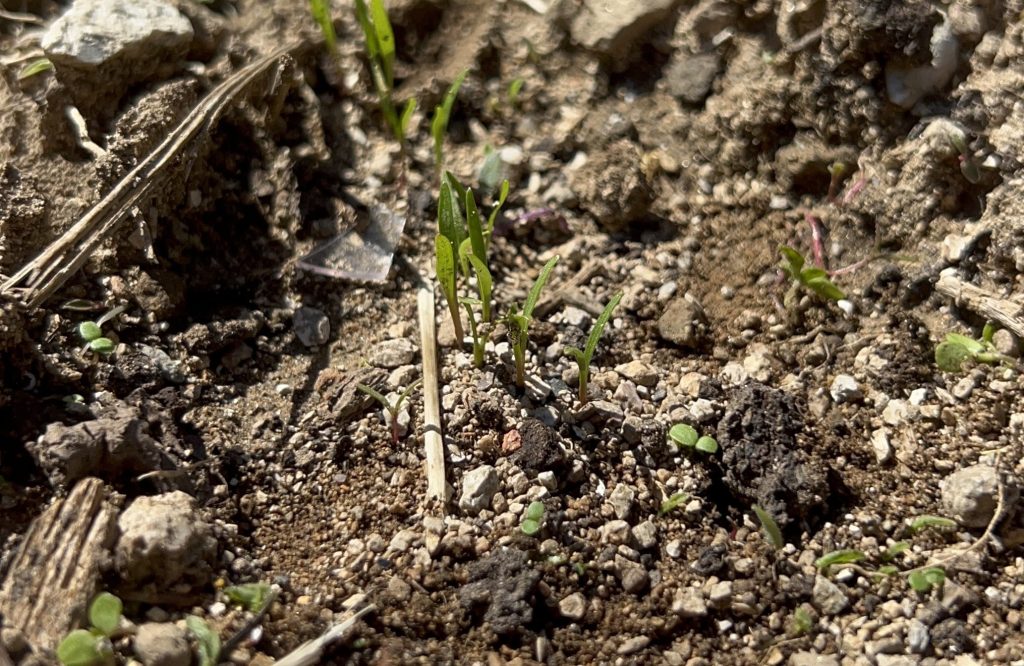
We chose the valley because the soil is extraordinary. For centuries, organic material has washed down from the surrounding slopes and settled on the valley floor. The result is deep, dark, living earth that grows things differently to anywhere else in the serra. People here have always known this.
A community garden in the heart of town
We are part of a community garden in the Bemparece valley — a shared space where several families and individuals each tend their own plot alongside each other. At the edge of the garden there is a bed of perennial herbs that belongs to everyone. Whoever needs rosemary takes rosemary. Whoever needs sage takes sage. It is a small arrangement, but it says a great deal about how the place works.
Our plot within the community garden is around 400 m², divided into five long beds. One of these beds has been planted with asparagus for over a decade and comes back every spring without much effort from us. The other four rotate through the seasons in a permaculture inspired system — summer heat crops give way to autumn greens, winter legumes make space for spring plantings.
Each bed follows the one before it in a slow cycle that moves down the garden year by year. Companion planting runs through all of it. Some plants support their neighbours, others draw pests away, and certain combinations build the soil rather than deplete it. We explore this in depth in our Companion Planting Course — but even just walking through the garden you start to feel the logic.
Water that has been flowing here for a thousand years
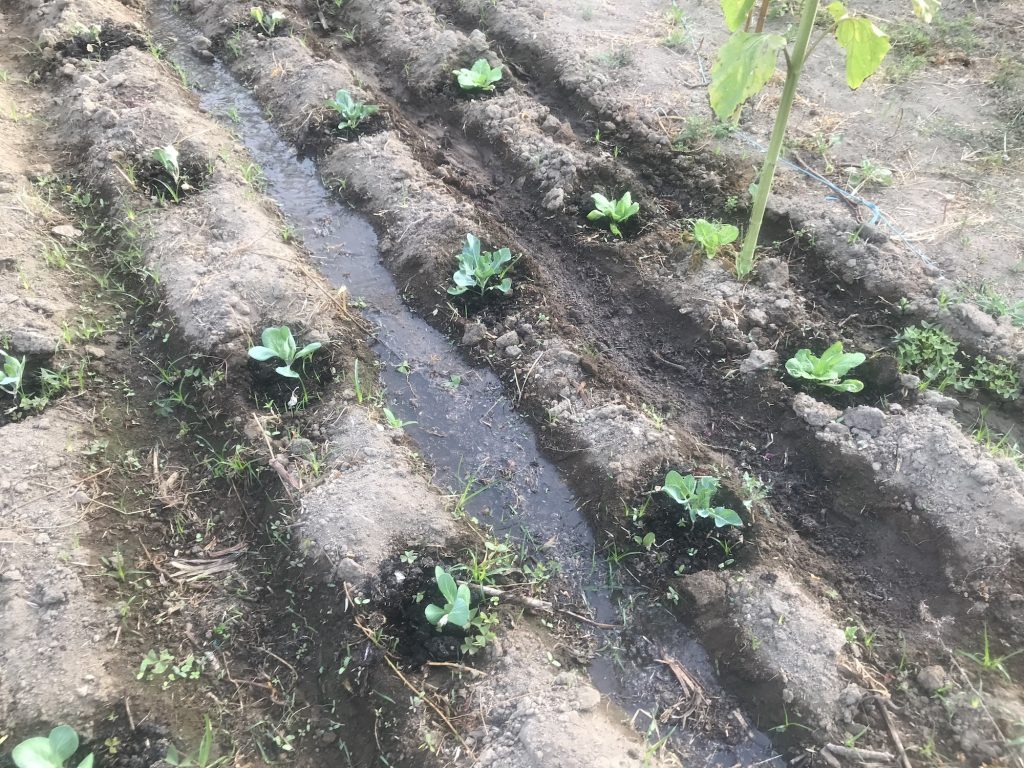
The water in our garden comes through channels between the planted rows. This is flood irrigation — one of the oldest ways of watering in this part of the world. Because the Moors ruled the Algarve between the 8th and 13th centuries, they brought with them sophisticated water systems from North Africa and the Arab world. They constructed levadas, noras and channels that moved water across dry land by gravity alone.
A 12th century Arab geographer described the Algarve as a land of beautiful cities surrounded by irrigated gardens and orchards. The system we use today in the Bemparece valley is a direct continuation of that thinking. Water flows through the channels, plants grow on the raised rows between them, and nothing is wasted. It is elegant once you understand it.
Nothing leaves the system
The garden is part of something larger. The goats on our land 6 km up in the serra produce manure that goes into the compost. Moreover, the compost feeds the soil in the valley. The soil, in turn, grows the vegetables.
The vegetables feed us, and the green manure gets cut and returned to the compost heap. Nothing leaves the system permanently. This is not a philosophy we designed and applied — it is simply what happens when you pay enough attention for long enough.
Come and learn it yourself
If this sounds like the kind of gardening and homesteading you want to learn, come and see it in person. We run hands-on courses at our homestead and this garden in Monchique — covering vegetable gardening for beginners, self-sufficiency and companion planting. Groups are small, the work is real and lunch comes from the garden.