
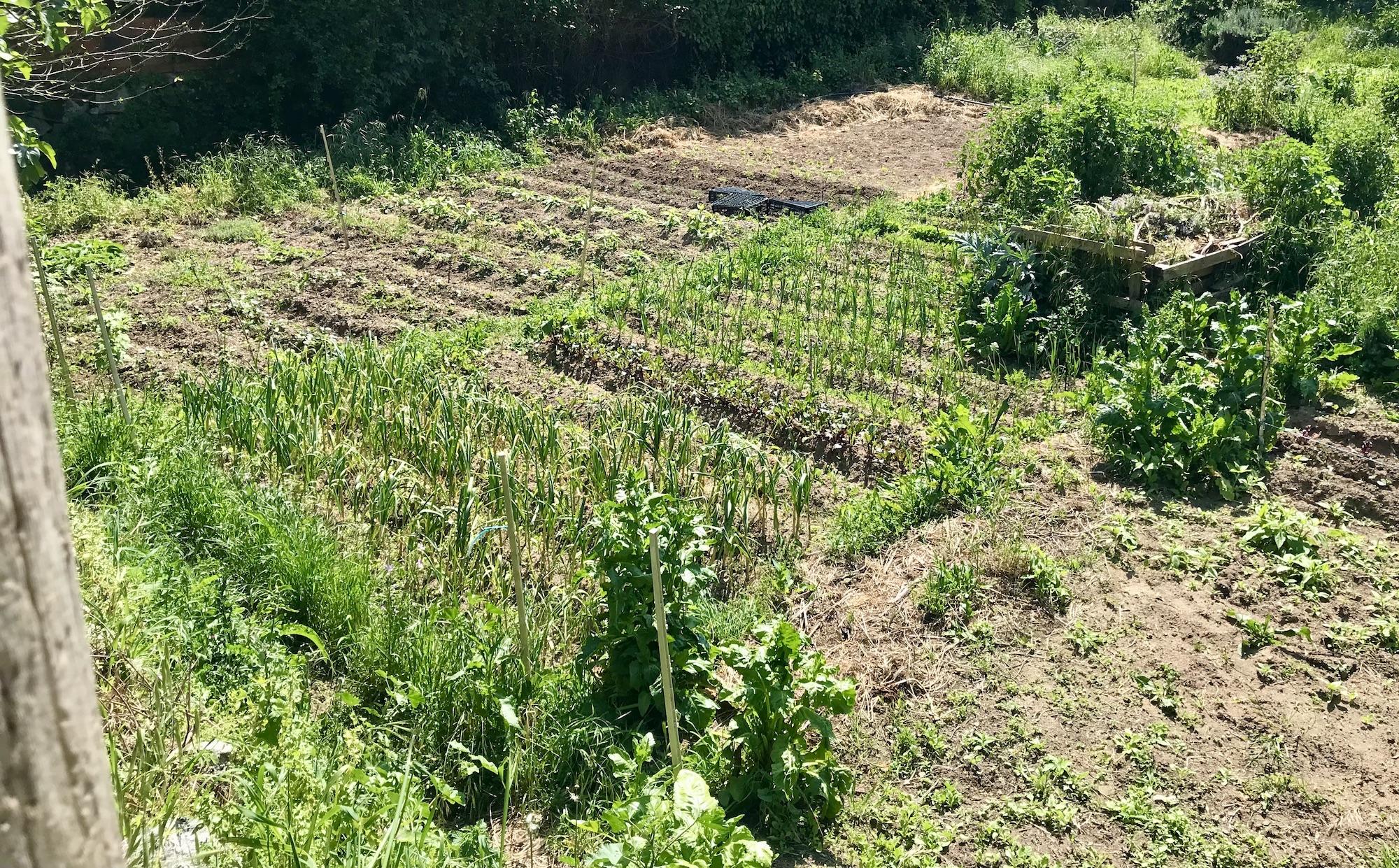
Many people think gardening is hard because they don’t have enough time, energy, or experience. In reality, most gardens become exhausting because organizing your vegetable garden has never been done properly, and everything requires too many decisions. Where can I step? What needs water? Is this a weed or a carrot? Nothing is clear, so every task takes longer than it should.
That’s when a garden starts draining you instead of feeding you.
Good organization changes this completely. It doesn’t mean making your garden pretty or perfect. It means setting things up so your garden works with you, not against you.
Why Organization Matters in a Vegetable Garden
When a garden is unclear, small mistakes happen constantly. You hesitate while weeding because you’re not sure what is planted where. You step on seedlings. You forget crops and harvest them too late. Watering becomes uneven because you no longer remember which plants need what.
Each mistake seems minor, but together they cost time, harvest, and motivation.
Walking Areas and Soil Damage
Problems increase when it’s unclear where to walk. People step onto beds, soil becomes compacted, and air and water stop moving properly through the soil. As a result, roots suffer. Once soil is compacted, you cannot fix it quickly. Recovery takes time and effort. Meanwhile, plants grow weaker and need more water and care.
Unclear Systems Create Problems
Unclear systems make things even harder. When irrigation lines move constantly, when spacing changes from bed to bed, or when layouts are improvised every season, confusion follows. Some plants stay stressed because they receive too little water, while others get too much. Because the system lacks clarity, you lose track of what still needs to be done and what is already finished. This often results in a lower harvest.
When the Garden Gets Bigger
A "creative" garden may still work in a small garden, but once you want your garden to provide most or all of your vegetables, everything changes. A productive garden needs more space to feed a family, volunteers, visitors, or guests. A larger garden, often worked by several people, quickly becomes overcomplicated without good organization.
The Human Factor
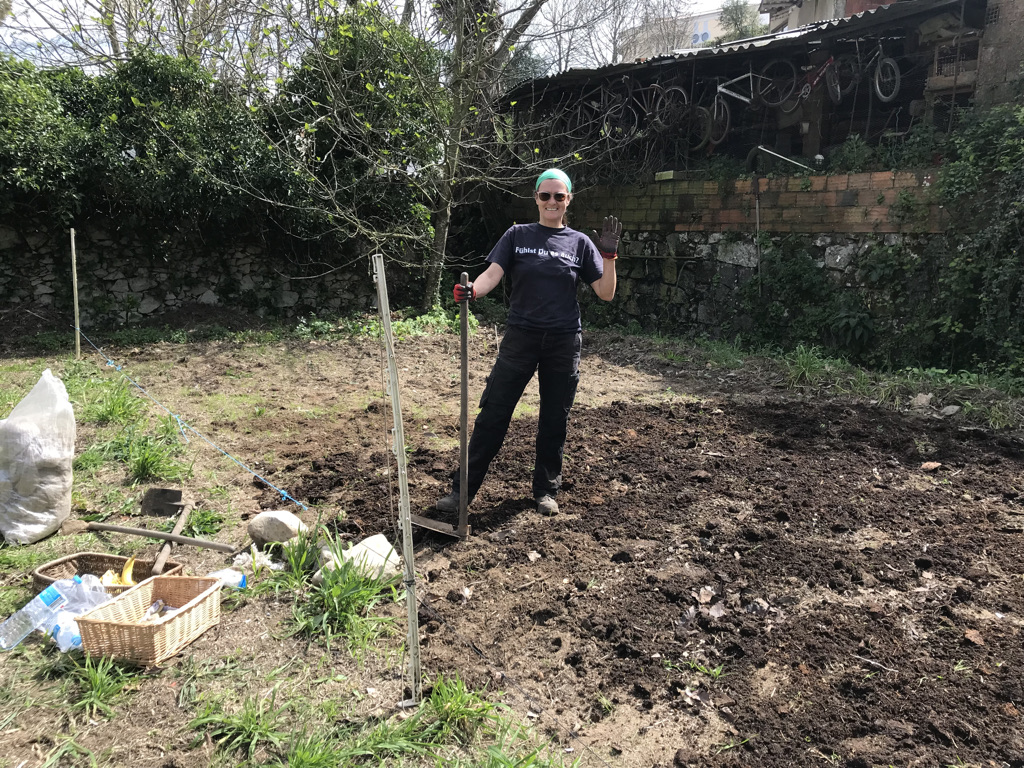
There is also a human side to garden organization. A garden that exists only in one person’s head works only as long as that person does everything. As soon as family members help, volunteers join, or you are tired or busy, others cannot follow your system. Mistakes and damage multiply. Helpers feel overwhelmed while trying to do their best, and you feel frustrated because you keep repairing their mistakes. Clear organization allows others to work confidently without harming the garden.
Mental Load
Finally, there is mental load. An unclear garden forces you to make decisions all the time. A well-organized garden removes most of them. Gardening becomes calmer, clearer, and more consistent, which makes it far more enjoyable.
What to Organize in a Vegetable Garden
At the heart of organizing your vegetable garden are five elements:
- Garden beds and paths
- Vegetables and herbs in beds
- Water
- Compost and manure inputs
- Tools
Garden Beds and Paths
You need a clear distinction between growing areas and walking areas. Beds are for roots. Paths are for feet, wheelbarrows, hoses, and tools.
The clearer this distinction, the less people step on the beds. Everything starts with separating beds and paths clearly. Once you decide where you never walk, your soil improves automatically. Water infiltrates better, roots grow deeper, and anyone can move through the garden without hesitation. You are not just organizing space; you are protecting your soil for the long term.
Vegetables and Herbs in the Beds
Once paths and beds are clear, you can organize the beds themselves. Every plant needs correct spacing at planting time. Proper spacing reduces competition, lowers disease pressure, and makes weeding faster and clearer. Plant spacing is not about neatness; it is about plant health and yield.
There is much more to say about spacing, but for now I’ll share a few tips that helped me. I even use a string for planting, and people sometimes laugh at me: “the Dutch lady with the string in the garden, ha, ha.” Apparently, this is a very Dutch thing to do. Still, it makes weeding during the growing season much easier, and our vegetables do not get mistaken for weeds.
More complicated patterns are possible, but helpers must be able to understand them. Helpers are often learners, so patterns need to stay simple. On top of that, planting patterns must work together with your watering system, which brings us to the next element.
Water
Water often limits vegetable gardens, especially in warm climates. Organizing water means choosing the right irrigation system, matching it to available pressure, and laying it out clearly so all plants receive water evenly. When watering is organized, plants experience less stress, water use becomes more efficient, and daily corrections disappear. Watering turns predictable instead of reactive.
For example, drip irrigation works best in larger gardens when beds run in straight rows. Bends often cause blockages because most drip irrigation pipes are designed for straight lines.
Compost and Manure Inputs
Compost and fertility need to follow a logical path. When compost stays close to where you use it and you apply it consistently, soil quality improves steadily and your back suffers less. Fertility should move easily through the garden, not fight against you.
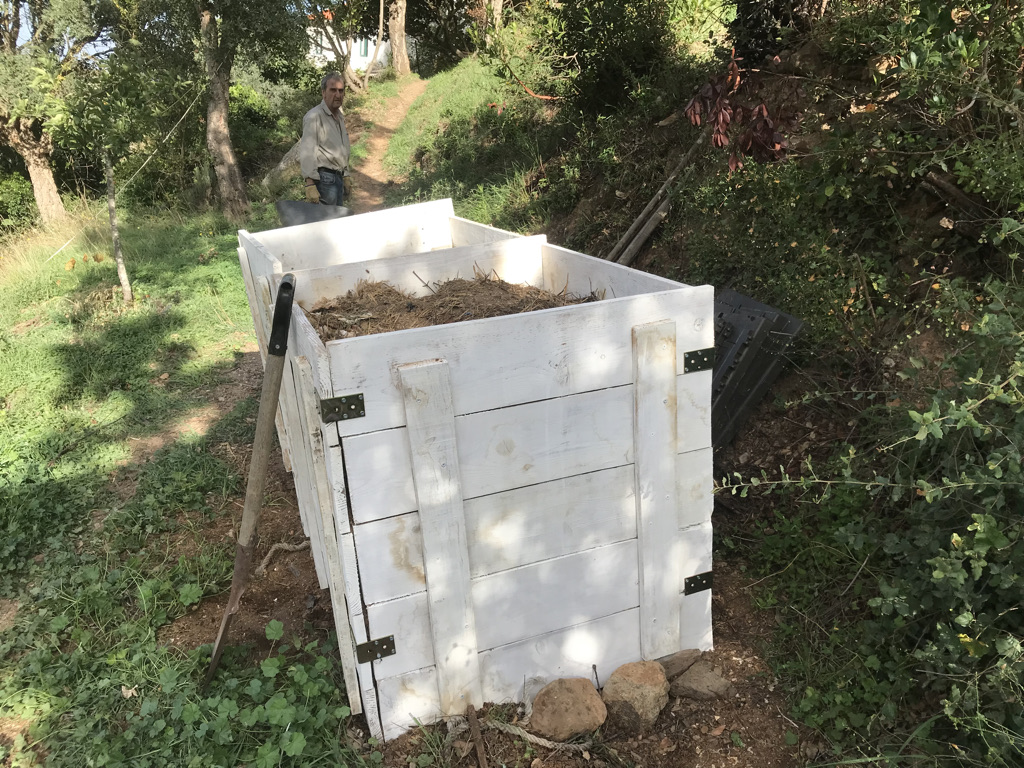
Where organic material enters the system, where compost matures, and how it reaches the beds all influence how easy it is to build healthy soil. Some organic material, like manure, comes from outside the garden. Other material, like weeds, comes from within. Clear organization of paths to and from the compost heap is essential. Short routes save energy when carrying heavy material.
How you design compost flows depends strongly on your garden and its connected systems.
This is how it works in our garden. We placed our compost heap in the middle of the garden. It handles only large plant residues, such as asparagus branches and sunflower stalks. We compost weeds directly on the paths. Because we keep goats, we compost goat manure near the goat house and bring it into the garden only when it is ready. We take it straight to the beds.
Tools
Finally, tools need a fixed place. When tools are easy to find and easy to return, work starts immediately and helpers feel confident instead of afraid of doing something wrong. A good tool system turns help into real help.
You use tools every time you work in the garden. As your garden grows and you aim to feed your family and helpers, tools make work much more efficient. However, tools tend to disappear, especially when they don’t have a fixed place close to where you use them.
You can store tools at the entrance or exit of the garden. When you enter, you take the right tools to the bed you plan to work on. When you leave, you return them to the same place.
You can also organize tools so you immediately see when one is missing. This makes it easy to send a helper back to collect a forgotten tool from a bed. That saves a lot of frustration later when you need it again.
How Organization Saves Time and Energy in Practice
When these elements are organized, work becomes efficient instead of exhausting.
In our own garden, we grow all our vegetables in one afternoon per week in winter and two afternoons per week in summer. The garden covers about 400 square meters, two to three people work it, and it produces more than enough food for us. This is not because we work harder; it is because the garden is organized.
The Takeaway: An Organized Garden Feeds You
Organizing your vegetable garden is not about perfection or aesthetics. It is about reducing repeated mistakes, protecting soil and water, lowering mental and physical effort, and growing more food with less work.
An organized garden feeds you.
An unclear garden drains you.
Get a note in your mailbox every time I make a new post, subscribe down below.