One of the most common questions we hear from people starting their first vegetable garden is this: what should I actually grow? There are hundreds of vegetables to choose from and it is easy to feel overwhelmed. After years of growing in the Serra de Monchique and teaching beginners through our courses, we have a clear answer — start with the ones that work, and leave the difficult ones for later.
Most gardening advice is written for cold climates
Here is something worth knowing before you read any gardening guide, including this one. Most vegetable gardening content online is written for cold and temperate climates — places with short growing seasons, cold winters and the constant challenge of getting enough warmth to ripen a tomato. The majority of online courses follow the same pattern. They are built around frost dates, extending the growing season and protecting plants from cold.
If you garden in a warm dry climate — whether in southern Portugal, Spain, southern France, Italy, Greece, California, southwestern Australia, South Africa or central Chile — much of that advice simply does not apply to your situation. You have a different set of challenges and a different set of advantages. Your summers are long and hot and dry. Your winters are mild. You can grow almost year round. But you also need to work with drought, intense summer heat and soil that dries out quickly.
This is why locally grown experience matters. The list below is based on years of growing in the Serra de Monchique in southern Portugal. It applies to anyone gardening in a similar warm dry climate anywhere in the world.
Warm season and cool season — the two growing windows
In a warm dry climate you do not have just one growing season — you have two. Understanding which window each vegetable belongs to is one of the most useful things a beginner can learn.
Warm season vegetables need both warm days and warm nights to produce well. Most need daytime temperatures of 21–32°C and nights above 15°C. Below 10°C, plants like tomatoes stop growing. These are your spring and summer crops — tomatoes, aubergines, peppers, beans, courgettes.
Cool season vegetables prefer lower temperatures — roughly 5–25°C during the day. They grow well in autumn, winter and early spring in a warm climate. Many will bolt and go to seed if temperatures rise too high. These are your winter crops — lettuce, fava beans, onions, radishes, beetroot, leeks.
Knowing which season your chosen vegetables belong to is more important than almost any other piece of gardening knowledge.
Where to find plants and seeds
Before getting to the list, it is worth knowing where to look for young plants.
Local monthly markets are one of the best sources. Many small growers sell young vegetable plants, often at very reasonable prices and well suited to the local climate.
Garden centres and agricultural coops stock young plants through the main growing seasons. Coops in particular often carry varieties well adapted to local conditions.
Neighbours and other gardeners are always worth asking. Anyone who grows from seed almost always has more seedlings than they need. Growers have a natural tendency to sow more than necessary — a conversation over a fence can save you a trip to the garden centre entirely.
Supermarkets stock herb plants like basil which are perfectly good to buy and plant out. For how to get the most out of a supermarket basil pot, read: How to Grow Sweet Basil
Easy vegetables for beginners in a warm dry climate
These are the vegetables we recommend in our 101 Starters Course. They are reliable, forgiving and well suited to a warm dry climate — whether you are planting in the warm season or the cool season.
Radishes
Sow directly in prepared soil.
Season: cool season — autumn, winter, early spring.
Temperature: germinates from 7°C, grows best at 10–18°C.
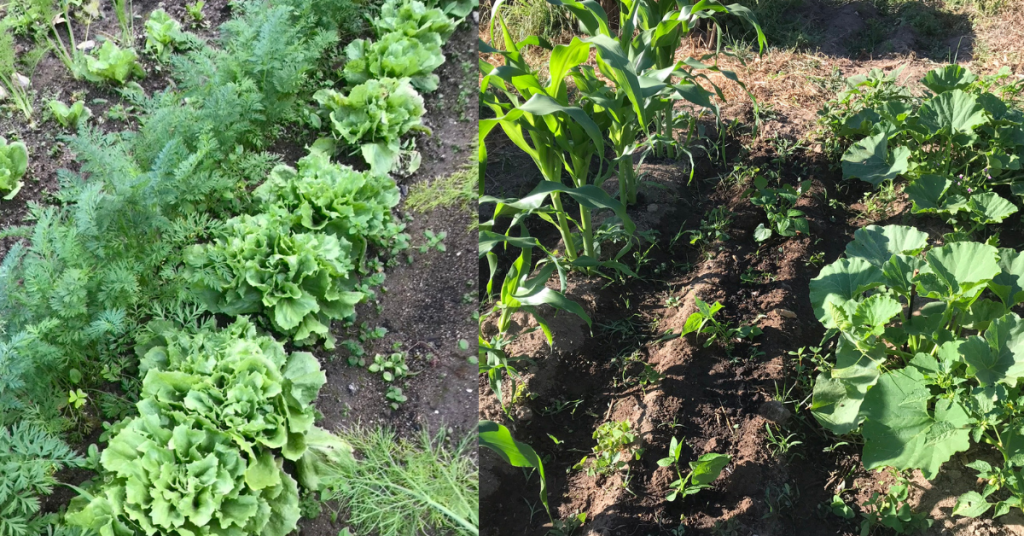
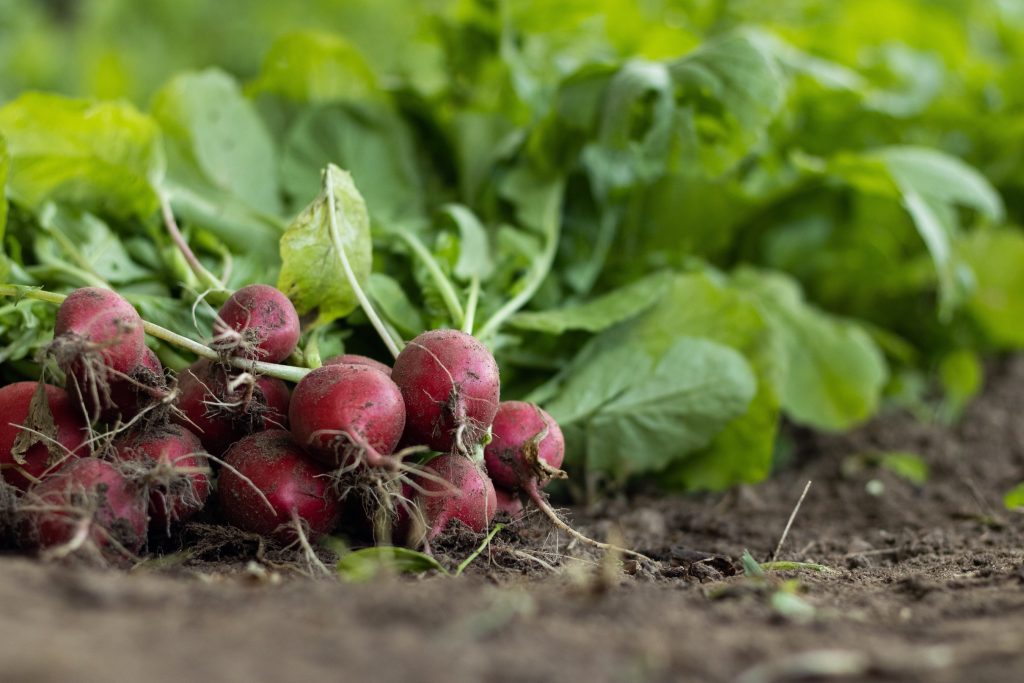
Radishes are ready to harvest in just 3 to 4 weeks from sowing. They need very little attention and are almost impossible to fail with. If you have never grown anything before, start here. The speed of the harvest builds confidence for everything else.
Lettuce
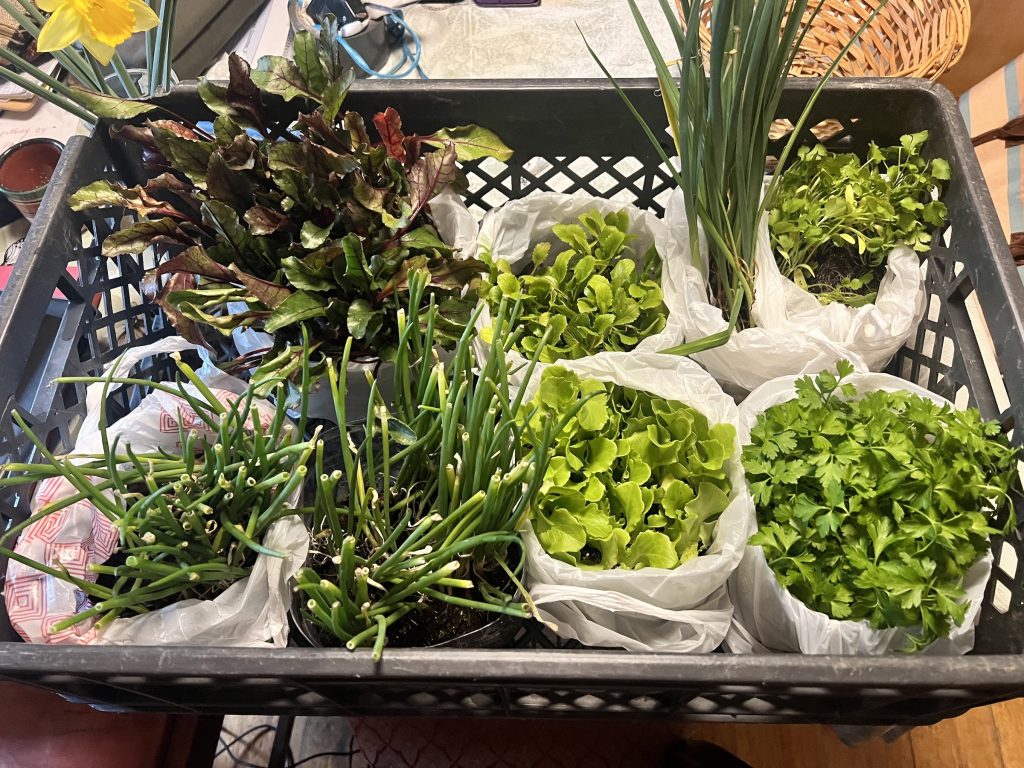
Buy as seedlings — direct sowing is not always straightforward for beginners.
Season: cool season — autumn through spring. Bolts quickly in summer heat.
Temperature: grows best at 15–20°C. Above 25°C it bolts to seed.
Fast and rewarding when started from bought seedlings. Harvest the outer leaves continuously while the plant keeps producing from the centre. In a warm climate, lettuce is a winter crop rather than a summer one.
Fava beans
Sow directly from autumn onwards in a warm climate.
Season: cool season — autumn to late spring.
Temperature: hardy and frost tolerant, grows well at 7–21°C.
One of the hardiest vegetables you can grow. Almost foolproof, generous with their harvest, and they fix nitrogen in the soil for the crops that follow them in the rotation.
Green beans (pole)
Sow directly once the soil is warm.
Season: warm season — spring through summer.
Temperature: needs soil above 15°C to germinate, grows best at 21–27°C.
Productive and satisfying once established. Pick regularly — leaving beans on the plant too long slows production. In a warm climate they grow fast and give a long harvest.
Onions
Buy as seedlings from the market or garden centre.
Season: cool season — plant in autumn or early spring.
Temperature: grows well at 13–24°C.
Straightforward from bought seedlings. They store well after harvest which makes them very practical for anyone growing their own food.
Leeks
Buy as seedlings.
Season: cool season — plant from autumn onwards.
Temperature: very hardy, grows at 7–24°C.
Reliable and low maintenance. They may stay a little smaller than shop-bought leeks but grow well in a warm climate and need very little attention once established.
Tomatoes
Buy as young plants from the market, garden centre or coop.
Season: warm season — plant after last cold nights, harvest through summer.
Temperature: needs nights above 15°C, grows best at 21–27°C during the day.
The most rewarding vegetable you can grow in a warm dry climate. Prolific and delicious once established. The long hot summer suits them perfectly — this is one of the vegetables where a warm climate is a genuine advantage over cooler regions. Buy young plants in your first year.
Aubergines
Buy as young plants.
Season: warm season — same timing as tomatoes.
Temperature: loves heat, grows best at 22–30°C.
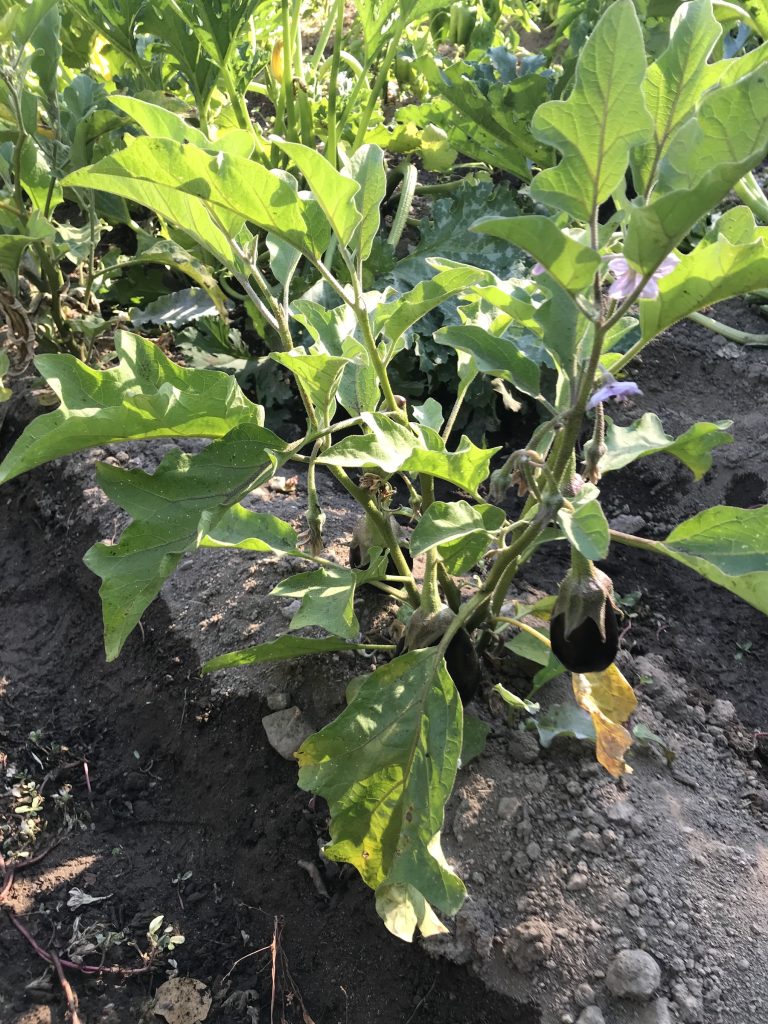
Aubergines thrive in hot dry conditions. They are considered demanding in cooler climates because they need a long warm season — but in a warm dry climate that is exactly what you have. Similar conditions to tomatoes and do well planted in the same area.
Beetroot
Buy as seedlings in your first year.
Season: cool season — autumn and spring.
Temperature: grows well at 10–24°C.
Easy and satisfying from seedlings. The whole plant is usable — the roots for cooking and the young leaves in salads.
Vegetables to leave for year two
Some vegetables look straightforward but are more demanding than they first appear in a hot dry climate.
Courgettes need very consistent attention, regular harvesting and enough space and airflow to avoid powdery mildew — a common problem in hot conditions.
Cucumbers are sensitive to heat and moisture fluctuations. They need more management than most beginners expect, particularly in dry summers.
Spinach bolts quickly in warm weather. In a hot dry climate it only works in a short autumn and early winter window. A classic example of advice from cold climates not applying here — spinach is considered easy in northern Europe but is genuinely difficult in a warm dry garden.
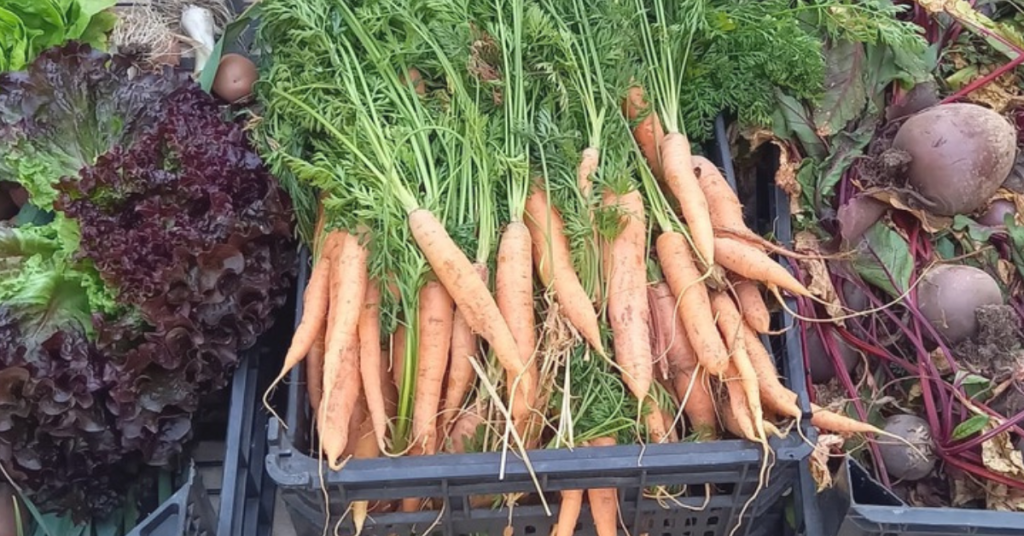
Carrots need deeply loosened stone-free soil, must be sown directly and take a long time. Thinning the tiny seedlings without disturbing neighbours is fiddly work.
Parsnips have similar requirements to carrots and are even slower to mature.
None of these are impossible. They are simply more demanding. Once you have a season of the easier ones behind you they become much more approachable.
Start with a wish list
In our 101 Starters Course, one of the first things we ask students to do is write a wish list — six vegetables they would most like to grow. Then we look at each one together: does it need full sun or partial shade? Is it a warm season or cool season crop? Is it better from seed or from seedlings?
Take your wish list, check each vegetable against the information in this post and adjust accordingly. A garden full of things that suit your climate and your experience level will always outperform one that is too ambitious too soon.
For a practical guide on getting your beds ready before you plant, read: How to Prepare Your First Vegetable Garden Bed
If you would like to go through your wish list in person and spend a day planting in a real working garden, our 101 Starters Course is exactly that — two days, small group, real work, lunch from the garden.
Find out about the 101 Starters Course at Monchique Homestead