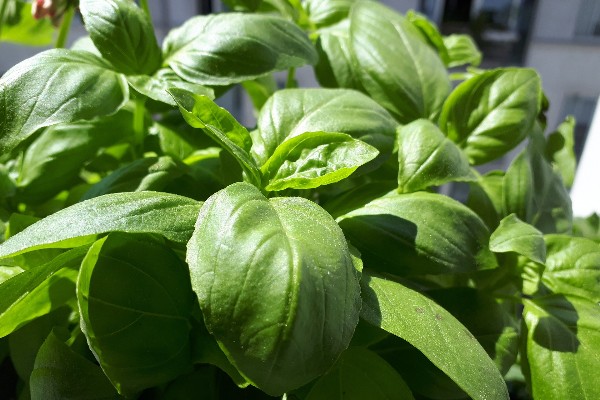
Sweet basil is one of the easiest and most rewarding herbs to grow. It is fast, productive and useful in the kitchen from the moment you harvest the first leaves. In this guide you will find everything you need to grow sweet basil well — from sowing to harvest, companion planting and storage.
Why Genovese basil
There are many varieties of basil available, but the one we grow at Monchique Homestead is Genovese. The leaves are large, tender and smooth — perfect for pesto and for adding whole to salads. Smaller-leaved annual varieties tend to have tougher leaves that do not blend as smoothly and are less pleasant to eat raw. If you are choosing a variety for the first time, Genovese is the one to start with.
Plant characteristics
- Latin name: Ocimum basilicum
- Family: Lamiaceae (mint family)
- Height: 20–60 cm
- Width: 15–20 cm
- Root depth: 20–30 cm
- Spacing: 20–25 cm between plants
- pH: 5.1–8.5
- Light: Full sun
- Water needs: Medium in loamy soil. In sandy soil, water regularly — drought stress causes the plant to flower early and the leaves become less tender
- Soil: Sandy soils of any type, or loam and clay soils that are rich in organic matter. Basil loves light, fluffy soil. For more on soil types read: About the Soil in Your Vegetable Garden
- Feeding: No fresh manure. Compost works well — basil tolerates even fresh compost
- Weed tolerance: Reasonable once established, as long as the basil is taller than the weeds around it
Companion planting
Basil is one of the most useful companion plants in a vegetable garden. It repels aphids and fruit fly, making it a valuable neighbour for many crops.
Good companions for basil include tomatoes, asparagus, cucumber, courgette, fennel and apricot. The combination of basil and tomatoes is particularly well known — they support each other both in the garden and on the plate. When planting basil next to tall crops like tomatoes or asparagus, make sure the basil is on the sunny side so it is not shaded.
Avoid planting basil near rue, chard and wormwood — these are poor companions.
Companion planting is something we explore in much more depth in our Companion Planting Course — if you want to understand how to design a whole garden around plant relationships, that is the place to start.
How to sow sweet basil
Starting in trays
In areas with a shorter growing season, start basil in trays indoors before transplanting outside. Use seedling compost rather than standard potting soil — potting soil is too rich for germinating seeds and can cause problems.
Biodegradable peat trays are useful here because you plant the whole tray into the ground without disturbing the roots. This gives the seedling a better start, especially when the growing season is short. Reusable plastic trays work well too — just place a flat tray underneath to catch excess water when watering.
Sow at a depth of 3 mm and a spacing of 5 cm. Germination takes 5 to 10 days at the right temperature.
Sowing directly
In areas with a long warm season you can sow basil directly into the garden. Sow a short row next to where you plan to grow them so you can easily transplant the seedlings. Make sure the seedbed is well weeded and raked fine — this helps you recognise the tiny basil seedlings when they emerge.
The supermarket shortcut
A practical tip if you only want a few plants: buy a pot of basil from the supermarket and plant it out. Growers usually put many plants into one pot. Turn the pot upside down, ease out the root ball carefully, and separate the individual plants. You will get 10 to 15 plants from one supermarket pot. They will still grow well once separated and planted out. This works until later in the season when conditions are still warm.
Germination temperature
This is the most critical factor for growing basil successfully. Basil will not germinate below 21°C. The ideal range is 21–29°C. Wait until the soil has warmed up properly before sowing directly — give it a week or so after the last cold nights.
In clay soils, the temperature stays cool longer, which can prevent germination even when the air feels warm. This is worth knowing before you conclude that your seeds have failed.
Growth and harvest
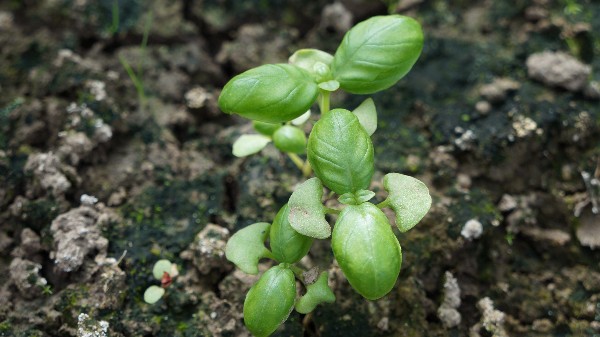
Seedlings emerge with two small heart-shaped seed leaves. The true basil leaves follow shortly after. From seed to harvest takes around 60 days.
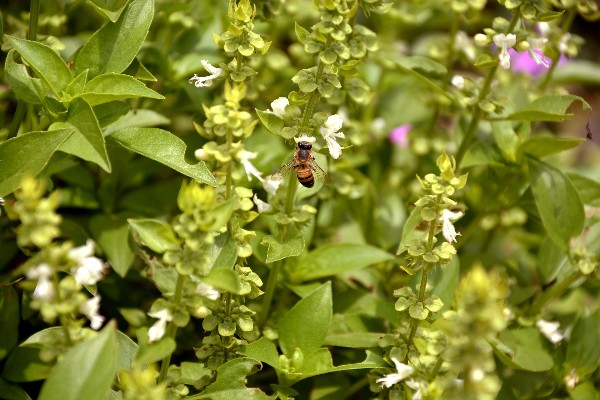
Harvest when the plant is full grown and the leaves are lush and green. You can still harvest when the plant begins to flower, but the leaves will be less tender. When flowering starts, remove the flower heads to encourage the plant to keep producing leaves. The flowers themselves have a strong basil flavour and are worth using in salads and as a garnish.
How many plants do you need?
This depends entirely on how you use basil. For the two of us we grow between 30 and 50 plants. We make large batches of pesto to last through the year. For someone who uses basil occasionally in salads, 10 to 12 plants is plenty.
If you have a long growing season, stagger your plantings — sow some early and some later to extend the harvest.
Storage
Drying sweet basil is not really worth it — most of the flavour is lost in the process. The best options are eating it fresh straight from the garden, or making it into pesto and freezing it in portions.
For pesto stored in jars rather than frozen, leave out the cheese entirely. Add a little lemon juice to lower the pH — this keeps the colour bright green and prevents the growth of harmful bacteria. For basil recipes including our pesto and tomato basil mozzarella, read: Basil Recipes — Pesto and Tomato Basil Mozzarella